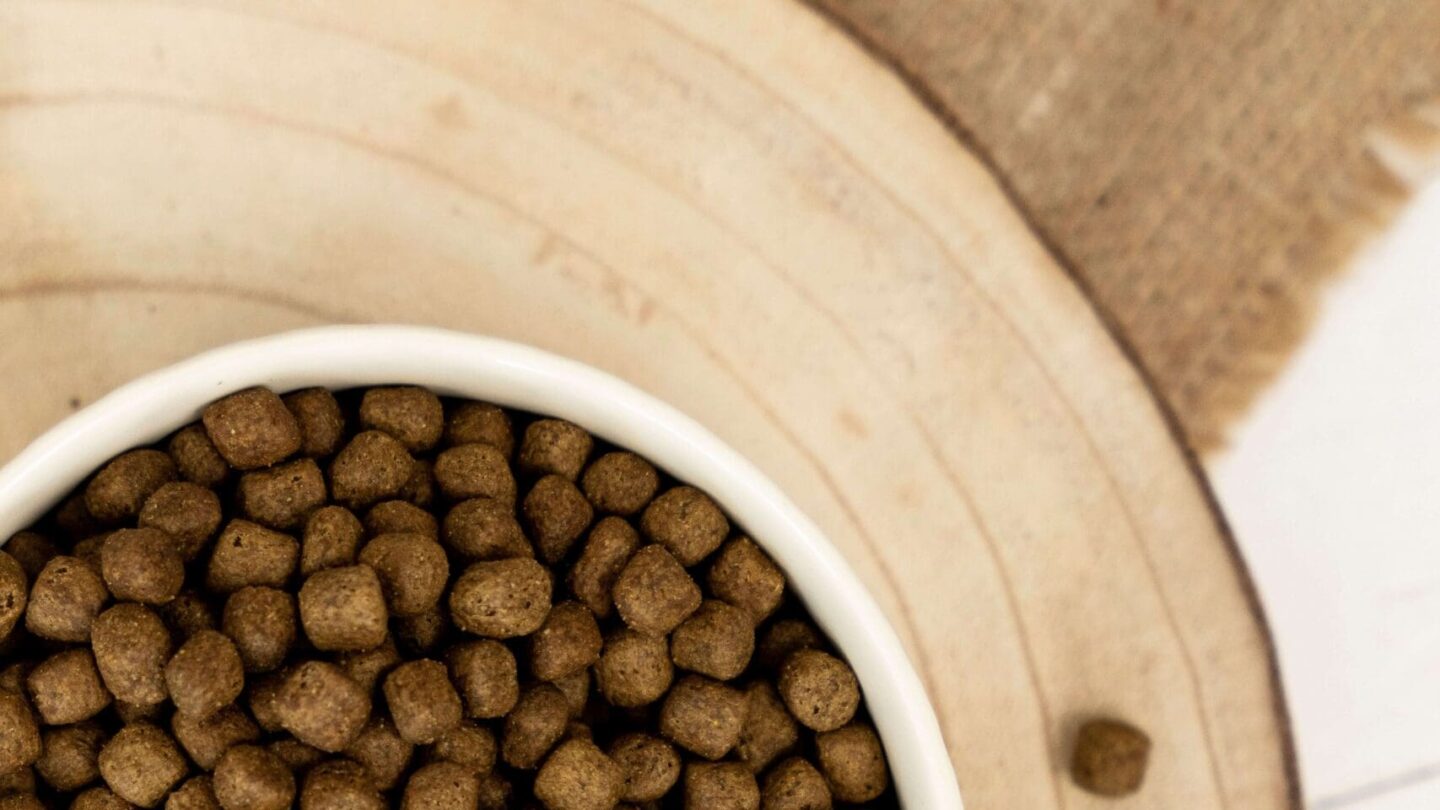

What is kibble?
Kibble is dry, bite-sized dog food made by blending and cooking ingredients into crunchy shapes. It’s one of the most popular feeding choices worldwide thanks to its convenience, long shelf life, and balanced nutrition.
This blog explores why kibble has become a staple in so many dog bowls. We’ll also look at how pet food has evolved — from simple table scraps to the scientifically formulated diets of today.
The rise of dry dog food
The story of kibble begins in the mid-19th century, when the first commercial dog biscuits were produced as a sturdier, more convenient alternative to feeding scraps. As pet ownership grew, so did demand for consistent and nutritious food. This lead to the development of early extruded kibble in the mid-20th century, a process that cooked ingredients under heat and pressure to create the familiar crunchy nuggets.
Kibble has evolved into more balanced, specialised formulas shaped by advances in nutrition and manufacturing technology. Other diets have also become available commercially due to technology and packaging advances. Cold-pressed diets, raw food, freeze-dried, and fresh-cooked meals offering pet owners a wider range of choices than ever before.
How kibble is made
Extrusion process
Kibble is usually made through extrusion, where ingredients are blended into a dough, this travels through a high-pressure cooker, then cut into uniform pieces before drying.
Typical recipes combine protein sources such as meat, poultry or fish with grains or legumes for structure, along with fats or oils, added vitamins and minerals; preservatives may also be included. High-quality natural kibble focuses on whole, traceable ingredients and avoids common fillers such as corn, wheat and soya.
However modern extrusion is now much more advanced than previous technologies. At Natural Dog Food we gently cook steam cook to protect the nutrients and ensure maximum digestibility, the kibble is cut into shape as it is cooked.
Baking and other methods
While extrusion is the most common method, some manufacturers use alternative cooking techniques. This includes kibble being baked at lower temperatures for longer, or cold pressing which involves blending ingredients and then compressing them into pellets at very low temperatures. Many companies claim greater nutrient retention, however pet food manufacturers must keep to minimum nutrient levels in order to sell to customers.
The quality of the raw ingredients also plays an important role in the final nutrient content. Ingredients that are naturally rich in nutrients will generally retain higher levels even after processing, whether they are extruded, baked, or cold-pressed.
Ingredients of kibble
Typical ingredients include proteins (meat, poultry, fish), grains or legumes. Some fats or oils may be added or used from the initial meat ingredient to avoid waste.
Carbohydrates such as rice, oats, legumes and potato are often used however quality and quantity of these will vary.
Vitamins and minerals are often added to boost levels of any nutrient loss during the cooking process.
Higher quality products will have meat rich recipes using good quality and whole carbohydrates, avoiding things such as wheat, dairy and maize which are common allergens.
Types of kibble and alternatives
Grain-free vs grain-inclusive diets
Choosing a diet for your dog will depend on their needs as some dogs have difficulty processing grain and so a grain-free diet will be more suitable. Natural Dog Food Sensitive is completely grain free for those dogs with extra sensitivities.
Grain-inclusive diets are not to be sniffed at! Whole grains are packed with nutrients and for most dogs are a great part of their diet. Looks for whole grain in the ingredient list and ensure they are not the first ingredient.
For example, Natural Dog Food company uses whole oats and brown rice in the Original Range while avoiding wheat and maize which are common allergens in dogs.
Prescription and hypoallergenic diets
Prescription diets are given by vets; these diets are often seen as a more sterile diet for when dogs are suffering from illness such as gastroenteritis, for weight management in obese dogs or when recovering from surgery. They are only available from the vet and are often expensive.
Hypoallergenic diets mean the food is created with a holistic approach. This means looking at the whole of the dog, using high quality ingredients and avoiding common allergens.
All of Natural Dog Food Company foods are hypoallergenic recipes using high quality and human grade ingredients. The Vet Care Range is an alternative to a prescription diet. This food has been specially developed to provide targeted nutritional support for dogs with specific health and wellbeing needs.
The pros of feeding kibble
- Convenient feeding – no preparation needed, feed straight from the bag
- Easy storage – can usually be stored in the packaging it comes in, great for travel.
- Cost effective – daily feeding amount can be very economical
- Nutritionally balanced – Generally balanced diets with everything the dog needs withing one product
- Hygienic and stable – much lower risk of contamination issues due to cooking process and no extra storage steps.
Convenience and shelf life
There is no preparation needed with kibble and you can feed straight from the bag, meaning it is a very convenient option. It can usually be stored in the packaging it comes in which is also great for travel. Most Kibble products will have a long shelf life meaning you don’t need to use it quickly.
Cost-effectiveness and value
Kibble is often very cost effective. The daily feeding cost is a true cost of the product so using this to compare products is advised. Most higher quality products, although have higher initial cost, will have an economical daily feeding cost, this plus higher quality diet does work out value for money in the long term.
Nutritional completeness and dental health
Kibble is often nutritional complete meaning everything the dog needs is withing the products so there is not need to add anything, this means that you can work out exact costs. Kibble is also good for oral health as the crunch of the kibble helps to remove plaque.
Cons of feeding kibble
As with all products available to buy, quality varies. Many products will often use cheaper and lower quality ingredients to cut costs, as well as using ingredients with bulk out the product. While cheaper to buy, the costs could be greater in the long run as the feeding amounts will often be higher, also lower quality nutrition does not support good health.
Higher quality products while more expensive initially will often have an average daily feeding cost which is reasonable. The higher quality ingredients will also support your dog’s overall health.
Natural Dog Food Company products for example, are produced with high quality human grade and higher welfare ingredients with no bulkers or fillers. High quality products with an economical daily feeding cost.
Natural dog kibble: a healthier choice?
Natural does not have a legal definition however natural kibble typically relies on recognisable, minimally processed ingredients. They avoid artificial additives and use gentler cooking methods to help preserve nutrients.
By keeping recipes closer to their original state and reducing reliance on synthetic colours, flavours, and preservatives, natural kibble can offer a cleaner, more digestible option compared with many standard commercial diets. It may also provide more consistent nutritional value and better support dogs with sensitivities to highly processed ingredients.
Natural Dog Food Company believes that for a happy, healthy dog, nature knows best. That’s why our recipes are crafted without artificial ingredients, and free from wheat, maize, dairy, soya, by-products, and fillers. We use only 100% human-grade ingredients to ensure the best possible quality for your dog’s health.
Top Tip: “If you’re unsure whether a kibble is natural, look for short ingredient lists and named proteins (e.g. chicken, salmon) rather than vague terms like ‘meat meal’.”
How to choose high-quality natural kibble
Research is key in choosing a food for your dog, while the front of the bag may look fantastic. the detail is in the back!
Always check the ingredients on the back of the bag, while the front of the bag may used attractive claims the ingredients list a legal requirement and mush be accurate.
Choose a kibble that is appropriate for your dog’s age. Many kibbles will have specific life stage ranges which will meet specific needs. Such as joint support for older dogs, or higher protein for Puppy development.
Some kibble is designed for specific needs such as weight management or skin issues; these should be clearly labelled. For example Natural Dog Food offers Original Senior dog food alongside Vet Care for more targeted needs.
Kibble vs. wet, raw and fresh diets
Dog food diets vary and not every dog will suit every diet. It’s important to compare cost by daily feeding amounts plus any extra cost such as delivery, as this will give you a true cost. Nutritional values and ingredients are a legal requirement on the back of the pack along with nutritional components of the food.
Don’t be fooled by clever advertising and social media buzz. Competition is fierce and not all claim are true, for example kibble is far from what it used to be. Modern technologies mean that kibble products like Natural Dog Food Company are much improved and can be very nutritious and palatable for dogs.
Fresh or raw foods have to be stored properly to avoid going off. Other forms such as cold-pressed use lower temperatures for longer but still cook the meats used within the product, storage and shelf life can vary between each product and should be clearly listed. Many wet or fresh diets will often have preservatives to keep them fresh so always check the ingredients.
Do vets recommend kibble or fresh food?
Vets will often recommend certain brands as they have association with teaching programmes, however this does not necessarily mean they are the best. Your vet will always help you find an appropriate food and may recommend certain things to lookout for in order to help your dog’s condition.
Not all foods are created the same and technology has improved over the years. Don’t be put off by one company stating a certain type of food is ‘boring’ or ‘lacking nutrition’ as these are clever marketing tactics. Instead look at ingredients and nutritional information for true values.
Why choose The Natural Dog Food Company?
The Natural Dog Food Company recipes are crafted without artificial ingredients, and are free from wheat, maize, dairy, soya, by-products, and fillers. The hypoallergenic formulas are made with fresh, human-grade and higher welfare meats with a selection of nutritious fruits, vegetables and herbs.
Natural Dog Food incorporates only the highest quality, natural ingredients with no fillers, by-products, derivatives, or bulking agents. This makes the food very easy to digest and suitable for the most sensitive of dogs.
“Toby has more energy and better digestion since switching. We won’t feed him anything else now!” -Chris Foster
Remember, always check the back of the pack and looks for clear terms such as Lamb or Salmon rather than meat. Calculate true daily cost for better comparison and if in doubt don’t be afraid to question the company.
If you are interested in finding a natural kibble for your dog, why not explore our natural kibble range to find the best fit for your dog.
FAQs about kibble
Is kibble just dry dog food?
Not all kibble is just dry food, products such as Natural Dog Food Company Sensitive use high quantities of fresh meat, although classed as a dry product they are not lacking nutrition.
What is the best small kibble for my dog?
If you are looking for a smaller kibble for your dog we would recommend our Natural Dog Food Company Original range. With a kibble size of 10mm x 11mm it is small enough for smaller breeds as well as being suitable for the bigger breeds too.
What is the difference between kibble and regular dog food?
“Kibble” simply means dry dog food, crunchy, bite sized pieces made by blending and cooking ingredients together. It is convenient, long lasting and great for dental health.
Natural Dog Food kibble is 100% natural, hypoallergenic and easily digestible, made with fresh, human grade meat, fruits and vegetables.
Regular dog food can also include wet or raw diets, which contain a higher moisture content. Kibble by contrast offers a complete, balanced meal in a convenient dry form.
When was kibble invented?
Kibble or dry dog food was first developed in the late 1800s. The earliest version, a baked dog biscuit was created by James Spratt an American entrepreneur in London.
Modern kibble became popular in the 1950s, offering a convenient, shelf stable alternative to tinned food.
At the Natural Dog Food Company, we brought kibble back to its roots. Natural, wholesome and free from fillers or artificial additives. Focusing on nutrition that keeps dogs healthy the way nature intended.
Is kibble bad for dogs?
No, kibble is not bad for dogs but some are better than others. Always research ingredients, make sure it is high quality.
At the Natural Dog Food Company our kibble is crafted from fresh, human grade meats, vegetables and fruit with no fillers, artificial additives or by products. It is hypoallergenic and easily digestible making it gentle on sensitive stomachs.
Poor quality kibble can contain cheap fillers and synthetic ingredients that offer little nutritional value.
It is not kibble that is bad for your dog, it is the quality that makes the difference.
Do vets recommend kibble or fresh food?
Most vets agree that what matters most is the quality and balance of the diet.
High quality kibble is complete, balanced and convenient providing all the nutrients dogs need without fillers or artificial additives. Premium natural kibble like ours remains a vet approved, nutritionally complete option for everyday feeding.
Can dogs live on kibble alone?
Yes, as long as the kibble is complete and balanced.
At the Natural Dog Food Company, our kibble provides all the essential nutrients, vitamins and minerals your dog needs to stay healthy. Each recipe is made with fresh, natural ingredients so it is wholesome, digestible and nutritionally complete.
In short, your dog can thrive on our kibble alone. No extras required, though healthy, Natural Dog Food Treats are always welcome!
How long does kibble last once opened?
Once opened, kibble generally lasts around 6 – 8 weeks if stored correctly.
To keep it at its best store your Natural Dog Food Company kibble in a cool dry place, sealed tightly in its original bag or an airtight container. This helps preserve the natural oils and nutrients and keeps the food tasting great.
How can I make kibble healthier for my dog?
Natural Dog Food kibble is already a healthy complete choice for your dog. However if you wanted to boost your dogs feeding time you could add fresh ingredients. A spoonful of cooked vegetables or berries can enrich your dogs’ meals.
Adding a small amount of warm water to your dog’s kibble can help to bring out the natural smells and flavours. This can also soften the kibble slightly for senior dogs.
Our kibble is already a high quality, complete and balanced diet, so a small addition of plain cooked veg could offer a small boost but is not necessary.
For more blog posts, visit our blog page!
Keep in touch:
Tiktok – naturaldogfoodcompany
Facebook – naturaldogfoodcompany
Instagram – naturaldogfoodco