As dogs age, it’s natural for them to start slowing down. In their senior years, their bodies undergo a range of changes, from digesting and metabolising food differently to having a less robust immune system.
To adjust to these changes, they often need a little extra support to help them stay comfortable and well. Feeding with a balanced and natural senior dog food can help your senior dog continue to enjoy a good quality of life and support their healthy ageing.
What is the difference between senior dog food and regular?
Senior dog food is specially formulated for older dogs to focus on their additional needs. It is typically lower in calories, higher in protein and has added ingredients which contain essential nutrients for older dogs.
These diets are available in different forms, but all have their own feeding guides tailored to senior-related issues.
Key features of senior dog food:
- Lower in fat and calories: As dogs age, their metabolism slows down, so senior food is less energy-dense to prevent weight gain.
- Higher in fibre: This can help prevent constipation, a common issue for older dogs.
- Joint support: Many formulas include higher levels of joint-supporting supplements like glucosamine.
- Protein: To maintain muscle mass, senior foods often list real meat as the first ingredient.
- Nutrient levels: Mineral levels may be adjusted to ensure older dogs get essential nutrients even with a lower-calorie diet.
- Specific nutrients: formulas will include specific nutrients to support digestive and cognitive function in older dogs.
- Improved palatability: Older dogs can suffer from a reduced sense of taste and smell, so senior dog foods are adjusted to compensate and encourage their appetite.
Key nutritional difference in senior formulas
Senior formulas have added nutrients such as omega-3 fatty acids, glucosamine, and chondroitin to support joint health, as well as lower levels of phosphorus for kidney health.
Understanding reduced calorie vs. increased protein needs
Senior dog foods are likely to have a reduced calorie rate to prevent weight gain as older dogs become less mobile and their metabolism slows down. These formulas will also have slightly higher protein levels to help combat muscle wastage as senior dogs start to become less active.
Is senior dog food necessary?
You may not need to switch if your dog is still active and healthy. Some senior dog foods will be designed to support your dog going into old age and may have a preventative approach. However, senior dog food may not be suitable for very active or working dogs, as they will have very high energy requirements.
If you don’t want to start on senior dog food now, it’s important to keep an eye on your dog’s weight, reducing the feeding amount to match your dog’s exercise level as needed. This will help them to maintain a healthy weight and avoid strain on joints as they age.
You should always consult your vet to determine when to change your dog’s food, especially if your dog has pre-existing health conditions like kidney disease.
What age should my dog have senior food?
The age at which a dog is considered “senior” varies depending on their size:
- Small dogs (under 10kg): Around 12 years old
- Medium dogs (11-25kg): Around 10 years old
- Large dogs (over 26kg): Around 8 years old
Other factors can also influence when dogs reach senior age:
- Size and breed: Larger dogs generally have shorter lifespans and age more quickly than smaller dogs due to the stresses on the body.
- Genetics: Genetics play a role in their ageing process, impacting each dog individually.
- Overall health: Good overall health is important, preventing issues from occurring sooner.
How much food should I feed my senior dog?
Portion sizes for senior dog food will vary, so always use the manufacturer’s guidelines as a starting point. Breed, activity levels, metabolic levels and overall health will all affect the feeding amount, so feed should be regularly adjusted to suit your dog’s needs.
Visits to the vet are a good opportunity to look at your dog’s overall body condition and give you an ideal and healthy weight for your dog’s breed, age and build. Use this weight as a target weight to feed to.

What is the healthiest dog food for senior dogs?
The best dog food for senior dogs has limited but high-quality ingredients to support good digestion. Protein sources should be clearly stated: avoid vague ingredients such as meat or meat meal, and instead opt for chicken, lamb or salmon.
Hypoallergenic and natural recipes are created to support a wide range of functions, containing carefully selected ingredients. These are more easily digested and less likely to contain artificial ingredients.
- High protein – to maintain muscle mass. Senior foods often list real meat as the first ingredient.
- Omega-3 fatty acids – to support skin and coat condition, aid digestion, and support cognitive function.
- Glucosamine and Chondroitin – to support healthy joints. Occurs naturally in meat and also added as a supplement.
- Antioxidants – to support the immune system. Found in fruits and vegetables.
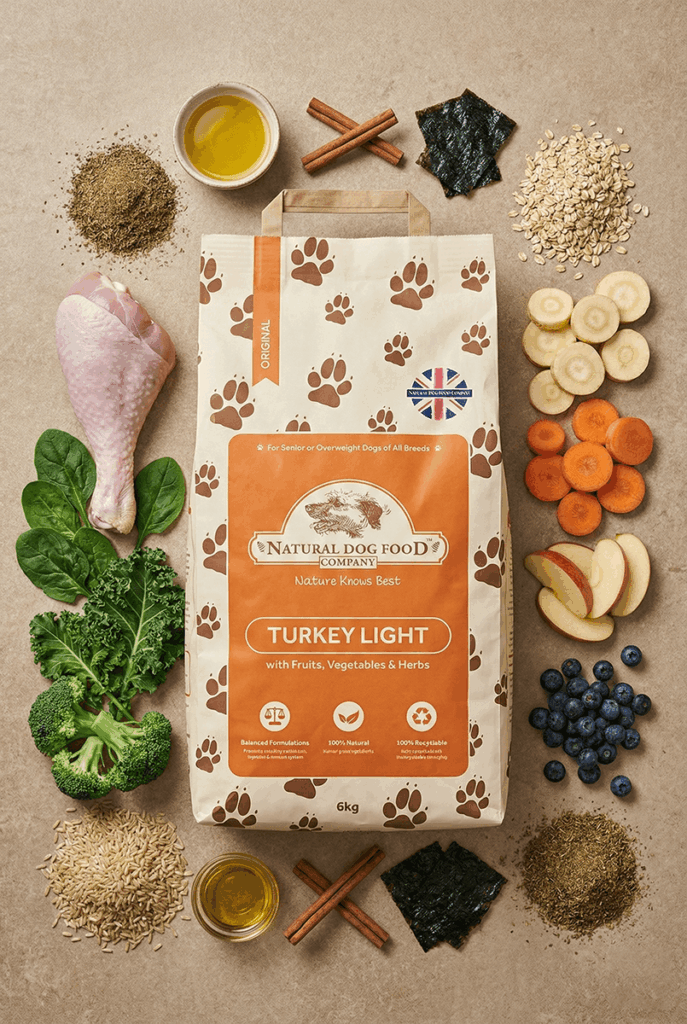
Natural Dog Food Company Original Senior Light uses carefully selected ingredients to ensure everything your older dog needs is within the food. This balanced formula is designed to support joint health, mobility, and major organ function, by incorporating a broad selection of therapeutic herbs to support long-term health and help maintain a healthy weight.
Common senior dog feeding challenges
Managing unexpected weight gain
Managing weight gain is one of the most common feeding challenges in senior dogs.
- Keep an eye on your dog’s weight every week: gradual weight gain is usually nothing to worry about, but any sudden changes should be checked in case of illness.
- Combine adjusted diets with low-impact exercise such as short walks or swimming to help maintain muscle mass, support joint health and reduce the risk of obesity.
- Opt for slightly increased protein to help prevent muscle wastage that is often seen in older dogs.
Feeding Natural Dog Food Senior/Light range can help support healthy weight management. Carefully formulated with herbs and vegetables, the recipe is tailored to help with joint strain, impaired major organ function and reduced mobility.
Encouraging a fussy eater
Loss of appetite is common in senior dogs- often linked to reduced sense of smell, dental issues or age-related changes in digestion.
It is recommended to feed a high-quality, natural diet made with gently cooked, highly digestible ingredients to help encourage eating. For example, NDF recipes are free from artificial additives and fillers, making meals more appealing, easier to digest and kinder on ageing dogs. To encourage a fussy eater, you can also:
- Serve food with a sprinkling of warm water to enhance aroma and palatability.
- Add left-over meats to your dog’s food can help encourage them to eat (mix in thoroughly to avoid them picking the food out).
- Offer smaller, more frequent meals can make eating feel less overwhelming.
- For dogs with dental sensitivities, softer textures or adding a little warm water can help.
- Maintain consistent feeding routines and monitoring appetite closely.
If appetite loss persists, we always advise consulting a vet to rule out underlying health concerns.
Adapting meals for dental issues
Dental and can make eating uncomfortable or even painful for senior dogs. Problems such as worn teeth, gum disease or sensitivity often lead to reluctance to eat or difficulty chewing harder foods.
- Opt for softer textures to ensure they can enjoy their meals without added strain
- Add a little warm water to your dog’s Natural Dog Food diet. Leave it to soak for a few minutes to help soften the kibble.
- Good dental care with regular dental checks can also help to maintain oral hygiene.
By offering Natural Dog Food alongside proper dental support, senior dogs can continue to eat comfortably while receiving the balanced nutrition they need to thrive.
Supporting sensitive stomachs
Ageing digestive systems can become less efficient and more easily irritated as dogs grow older. This can cause digestive sensitivities, often indicated by loose stools, gas or general discomfort after meals. To supportive sensitive stomachs:
- Feed smaller, more frequent meals to help improve digestion and maintain consistent feeding times
- Gradually transition diets and closely monitor for any changes in symptoms and close monitoring are essential.
- Look for natural recipes and food designed for sensitivities: Natural Dog Food Senior/Light range is hypoallergenic and avoids all common allergens in dogs.
If symptoms persist, we always recommend consulting your vet. This will rule out underlying health issues and ensure your senior dog continues to receive the nutrition they need.
Adapting to reduced appetite
Reduced appetite is often caused by age-related changes, such as a reduced sense of smell or taste, dental discomfort or slower digestion. Smaller, more frequent meals may be needed.
- Maintain a consistent feeding routine and monitoring changes in appetite is important.
- If reduced appetite persists, consult your vet to rule out any underlying health concerns.
Ensure your senior dog continues to receive the balanced nutrition they need to stay healthy and comfortable.
Feeding tips for senior dogs
- Leave food for longer – Feeding habits can change with age, so adapt for fast eaters that now need more time to finish meals.
- Environmental considerations – Avoid big changes to their surroundings, as this can become stressful to senior dogs, affecting their appetite.
- Keep times consistent – Most dogs will benefit from a regular feeding schedule.
- Warm or soften food – Warm water helps soften food and release flavours to encourage feeding a reduced appetite.
- Fresh water – Provide fresh water at all times; older dogs can easily become dehydrated.
When to consult your vet about senior dog nutrition
Keep an eye for early warning signs, such as sudden weight loss or gain, persistent appetite changes, sickness, diarrhoea, tiredness, difficulty eating. Also, these symptoms could indicate a bigger problem.
Ultimately, the healthiest state for your senior dog will be supported by a careful balance of veterinary care where needed, attentive ownership, and high-quality diet tailored to their needs.
Natural Dog Food Company’s approach to senior dog food
At the Natural Dog Food Company, our precisely selected food formulations put your dog’s health first. Our Senior/Light range is a complete and balanced diet designed specifically for older dogs:
- Free from artificial additives
- Made with British sourced ingredients
- Tailored to support joint health, mobility, organ function and overall wellbeing
By combining a high-quality diet with regular exercise, consistent feeding routines and regular vet checks, you can help your senior dog thrive and enjoy a long, happy and healthy life.
Explore our full shop range of natural dog food today. Or, for more tips on tailoring diets and routines, visit our blog.
For more blog posts, visit our blog page!
Keep in touch:
- Facebook – naturaldogfoodcompany
- Instagram – naturaldogfoodco
- Tiktok – naturaldogfoodcompany
- X – @Natural_DogFood