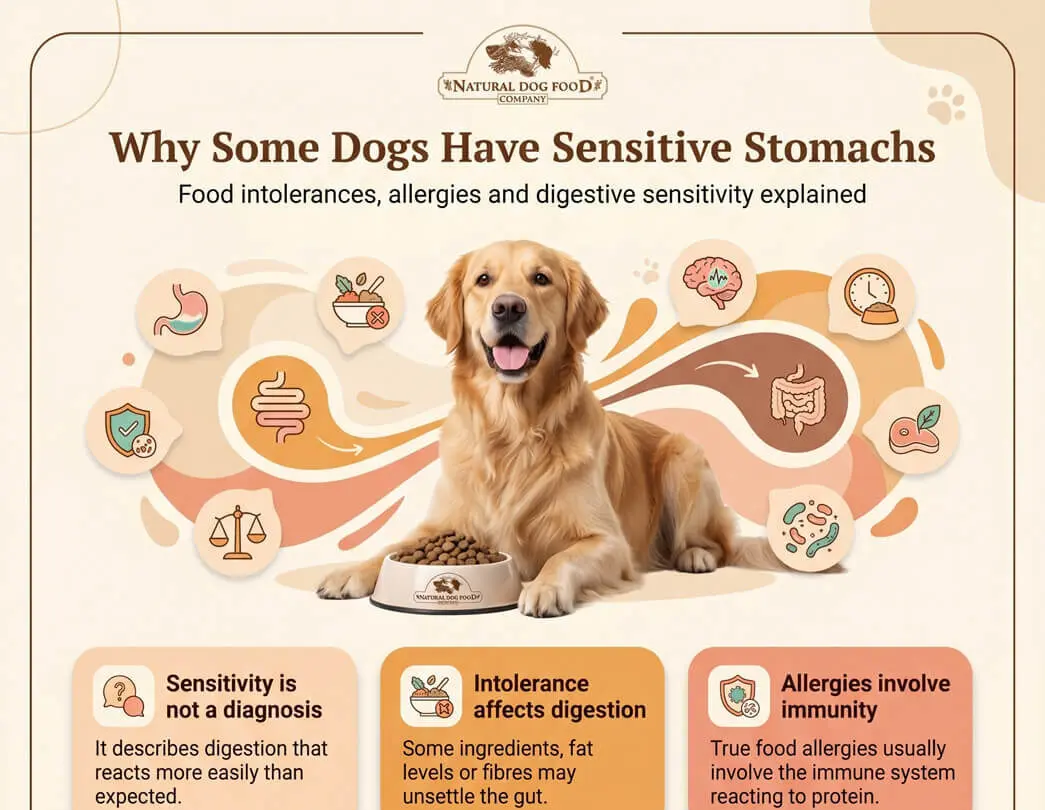

Food intolerances, allergies and digestive sensitivity explained
A sensitive stomach can show itself in many ways. Some dogs have loose stools, wind, gurgling, occasional vomiting or a tendency to become unsettled after eating. Others seem fine most of the time, but flare up after a new treat, a change of food, a rich meal or something picked up on a walk.
For owners, it can feel like guesswork. One food seems to suit them, another does not. A small change can cause several days of upset. The dog may still be bright and hungry, but their digestion is clearly not comfortable or consistent.
The phrase “sensitive stomach” is useful, but it is not a diagnosis. It is a general way of describing a digestive system that reacts more easily than expected. The underlying reasons can vary. Some dogs have food intolerance, whereas other have a true food allergy. Some have digestive sensitivity linked to stress, gut bacteria, fibre balance, fat levels, sudden change or inflammation.
The difference between an intolerance and an allergy
Understanding the difference matters, because not every upset stomach is an allergy.
A food intolerance is an adverse reaction to something in the diet that does not involve the immune system. It is usually a digestive problem. The gut may struggle to process a particular ingredient, fat level, fibre type or additive. The result may be loose stools, excess wind, bloating, gurgling or vomiting. Food intolerance can happen quickly and may depend on the amount eaten. A small piece of something may cause no issue, while a larger portion triggers a clear reaction. Food intolerance is different from food allergy because it does not require the immune system to identify the food as a threat.
A food allergy is different. In a true food allergy, the immune system reacts to a dietary component, usually a protein. The immune system treats that protein as something it should defend against. This can lead to inflammation and signs that may involve the skin, ears or digestive tract. Dogs with food allergy may have itching, recurrent ear problems, paw licking, skin redness, vomiting or diarrhoea. Food allergies can be difficult to prove, and blood or saliva tests are not considered reliable ways to diagnose them. The most useful method is usually a properly controlled elimination diet followed by a dietary challenge.
Digestive sensitivity sits in a broader middle ground. A dog may not have a true allergy, but their gut may still be reactive. The digestive tract is not just a tube. It is a living system made up of muscles, enzymes, nerves, immune cells, epithelial cells and microorganisms. When that system is easily disturbed, the result can be inconsistent stools, wind, urgency or discomfort.
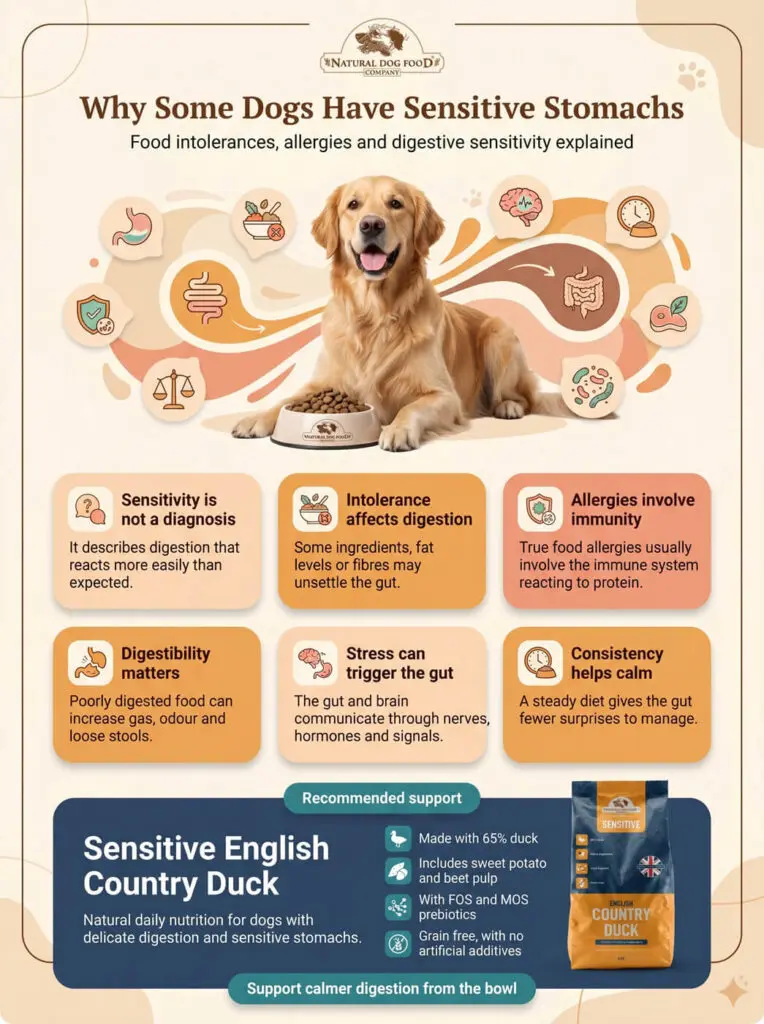
How diet can affect sensitive stomachs in dogs
One key part of this is digestibility. Food must be broken down before the body can use it. Protein is broken into peptides and amino acids. Fat is broken into fatty acids and glycerol. Carbohydrates are broken into smaller sugars. If food is difficult to digest, more partially digested material can reach the large intestine. Once there, gut bacteria ferment it. Fermentation is normal, but too much of the wrong material can increase gas, odour and stool inconsistency.
Fats and fibre
Fat level can also matter. Fat is an important energy source and helps make food palatable, but some dogs do not cope well with sudden increases in dietary fat. A rich treat, leftover roast meat, cheese or fatty scraps can overwhelm a sensitive digestive system. This is one reason dogs may seem fine on their usual food but react badly to extras.
Fibre is another major factor. Fibre influences stool structure, water balance, gut movement and the microbiome. Some fibres help bind water and improve stool consistency, other add bulk. Some are fermented by bacteria, producing short-chain fatty acids such as butyrate, which helps nourish cells lining the colon. The aim is not simply to add more fibre, but to provide the right type and amount for a calmer digestive rhythm.
Microbiome
The microbiome also plays a central role. This is the community of bacteria and other microorganisms living in the gut. A stable microbiome helps support digestion, stool quality and immune signalling. Sudden food changes, antibiotics, illness, stress or scavenging can disrupt this balance, known as dysbiosis. When microbial balance is disturbed, stools may become looser, smellier or less predictable.
When a dog has a sensitive stomach, diet is one of the most important management tools. The goal is to reduce unnecessary digestive workload and feed in a way that the gut can process calmly and consistently. That usually means choosing a complete food with a clear protein source, digestible carbohydrate, useful fibre and no unnecessary extras.
Protein
Protein choice is particularly important. In dogs suspected of dietary sensitivity, vets may recommend either a hydrolysed protein diet or a novel protein diet. A novel protein is one the dog has had little or no previous exposure to, which may reduce the chance of an immune reaction in dogs with suspected food-responsive disease. Duck is one example that can be useful for some dogs, depending on their feeding history.
Stress or change
Stress can be a genuine digestive trigger too. The gut and brain communicate through nerves, hormones and immune signals. This is often called the gut-brain axis. Travel, kennels, fireworks, new routines, separation or excitement can all alter gut movement and sensitivity in some dogs. This is why a dog may develop loose stools around stressful events even when their food has not changed.
Consistency is just as important as the recipe itself. If a sensitive dog is fed a good food but also receives random treats, table scraps and frequent changes, the gut never has a stable pattern to work with. A consistent diet makes it easier to see what agrees with the dog and what does not. It also gives the microbiome time to adapt.
How a natural dog food can help
Natural Dog Food Company Sensitive English Country Duck fits well for many dogs with delicate digestion. It uses 65% duck, alongside sweet potato, beans, beet pulp, fruit and vegetables, omega-3 support, FOS and MOS prebiotics. It is grain free and made without artificial additives, wheat, dairy, soya or fillers. The recipe is designed for sensitive digestion while still providing complete, natural daily nutrition. For a poultry free option, Natural Dog Food Company Sensitive Salmon provides high quality nutrition for sensitive stomachs.
Food should not be used to ignore serious signs. Veterinary advice should be sought if a dog has persistent diarrhoea, repeated vomiting, blood in the stool, weight loss, loss of appetite, dehydration, abdominal pain, lethargy or repeated flare-ups that do not settle. Sensitive stomachs are common, but ongoing digestive problems deserve proper investigation.
For many dogs, however, a calmer stomach begins with a calmer bowl. The right food gives the digestive system fewer surprises, more usable nutrition and a steadier routine. When ingredients are carefully chosen and fed consistently, the gut has a better chance of doing what it should: digesting food, absorbing nutrients, supporting the microbiome and producing stools that tell owners things are finally settling down.
For help and advice on diarrhoea in dogs and puppies, visit our blog post.
For more blog posts, visit our blog page!
Keep in touch: