
Grass eating is one of those dog behaviours that owners notice, question and sometimes worry about. A dog may pause during a walk, lower their head and start grazing as though they have suddenly become part sheep. Some nibble delicately. Others tear at long blades with enthusiasm. Some eat grass and vomit afterwards. Many do not.
For owners, the natural question is simple: why are they doing it?
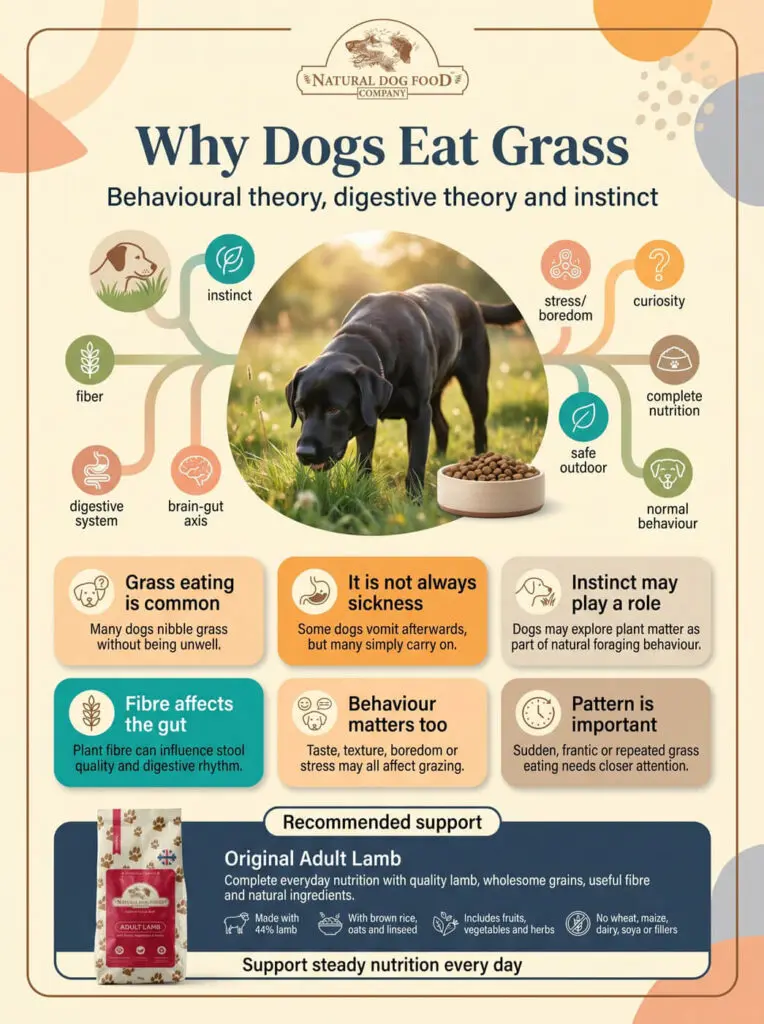
The honest answer is that there is probably not one single reason. Grass eating appears to be a normal and common canine behaviour, but the motivation can vary from dog to dog. It may be linked to instinct, digestion, taste, boredom, stress, gut movement or simple opportunity. The important part is understanding when it is harmless and when it may be a sign that something else needs attention.
The technical term for eating non-food items is pica. This can include eating things such as grass, soil, stones, wood, fabric or other unsuitable objects. However, grass eating sits in a slightly unusual category. It is technically plant eating, but it is also extremely common and is not always abnormal. Veterinary behaviour guidance describes pica as the eating of unusual amounts or types of food or non-food items, but also notes that some of these behaviours can overlap with normal investigative and exploratory behaviour.
Why do dogs eat grass?
To induce vomiting
One of the most familiar theories is that dogs eat grass because they feel sick and want to vomit. There may be some truth in this for certain dogs at certain times. If a dog has nausea, stomach discomfort or irritation, they may seek out grass and then vomit shortly afterwards. Long blades of grass may irritate the throat or stomach lining enough to trigger vomiting.
However, this theory does not explain most cases. Research and veterinary discussions have repeatedly suggested that many dogs eat grass without appearing unwell beforehand. One commonly cited survey found that plant eating was common in dogs, but only a small proportion showed signs of illness before eating plants, and vomiting afterwards was not the usual outcome.
This means grass eating should not automatically be seen as a dog trying to make themselves sick, sometimes a dog eats grass and vomits. Often, a dog eats grass and carries on with their day as though nothing unusual has happened.
Aid digestion
The digestive theory is still worth considering, but in a broader way. Grass contains fibre, mostly in the form of cellulose and other structural plant material. Dogs are not designed to digest grass in the same way as grazing animals, because they do not have the same specialised fermentation system as cattle, sheep or horses. Much of the grass may pass through the digestive tract only partly changed.
Even so, fibre can affect gut movement. In the digestive tract, fibre can add bulk, influence stool consistency and alter how material moves through the bowel. Some dogs may be drawn to grass because their gut feels unsettled, slow or irregular. Others may simply enjoy the texture and sensation of chewing it.
This does not necessarily mean the dog’s diet is deficient. A dog eating grass is not automatically lacking vitamins or minerals, especially if they are already eating a complete and balanced food. Nutrient deficiency is sometimes suggested as a reason, but there is limited evidence that this is the main explanation in well-fed dogs. In many cases, grass eating appears to be more about behaviour, instinct or digestive sensation than a clear nutritional shortage.
Instinctual
Instinct is another strong theory. Domestic dogs are not wolves, but they still carry behaviours shaped by their ancestry. Wild canids do not eat only muscle meat. They may consume plant material through scavenging, gut contents of prey or direct plant eating. Grass eating may therefore be a normal leftover behaviour from a more varied, opportunistic feeding pattern.
This is where dogs differ from strict human expectations of what they “should” eat. Dogs are carnivorous-leaning omnivores. They can use animal protein very well, but they can also benefit from carefully selected plant ingredients, fibres and carbohydrates. A dog pausing to nibble grass may not be doing anything medically dramatic. They may simply be expressing an old foraging behaviour in a modern garden.
Behaviour also matters. Some dogs eat grass because they are bored, under-stimulated or enjoying the sensory experience. Grass has smell, texture, moisture and taste. On a warm day, fresh young grass may simply be interesting. Puppies and younger dogs in particular often explore the world with their mouths, and grass may become part of that investigation.
Can stress cause my dog to eat grass?
Stress can play a role too. The gut and brain communicate constantly through nerves, hormones and immune signals. This is often called the gut-brain axis. A dog who is anxious, overexcited or unsettled may show changes in gut movement or appetite. Some may lick, chew or graze more when their nervous system is heightened. This does not mean every grass-eating dog is stressed, but it is worth considering if the behaviour appears alongside pacing, restlessness, lip licking, whining or changes in stool quality.
The main concern with grass is not usually the grass itself, but what may be on it. Grass can carry pesticides, herbicides, fertilisers, slug pellets, parasites, bacteria or contamination from other animals. Roadside grass may also be exposed to pollutants. Dogs should not be encouraged to eat grass from unknown areas, treated lawns or places where chemicals may have been used.
Owners should also pay attention to pattern. Occasional grass eating in an otherwise healthy dog is usually not a major worry. Sudden, frantic or repeated grass eating is different. If a dog is gulping grass urgently, vomiting repeatedly, producing diarrhoea, losing weight, refusing food, appearing painful, or eating other non-food objects, veterinary advice is needed.
Can diet stop my dog eating grass?
Diet can help by giving the digestive system steadiness. A complete food with quality protein, digestible carbohydrates, appropriate fibre and natural plant-based ingredients can support normal digestion without relying on the dog finding roughage outdoors. Consistency is important too. Frequent food changes, rich treats and table scraps can all disturb the gut and make grass eating harder to interpret.
This is where Natural Dog Food Company Original Adult Lamb is a sensible everyday choice. It is made with 44% lamb, including 26% freshly prepared lamb, alongside brown rice, oats, fruits, vegetables, herbs, linseed, sugar beet, sunflower oil and brewer’s yeast. With 22% protein, 12% oils and fats and 6% fibre, it provides complete, steady daily nutrition with natural ingredients and no wheat, maize, dairy, soya, by-products, fillers or artificial ingredients.
The inclusion of brown rice, oats, linseed and sugar beet gives the recipe a thoughtful fibre and carbohydrate base, while the fruit, vegetable and herb blend reflects the kind of plant matter dogs may naturally encounter through foraging. That does not mean a dog will never nibble grass again, but it does mean their daily diet is already giving them balanced nutrition, useful fibre and dependable nourishment.
Grass eating is not always a problem to solve. In many dogs, it is simply normal behaviour: part instinct, part curiosity, part digestive habit. The key is watching the whole dog. If they are bright, eating well, passing normal stools and only grazing occasionally, there may be little cause for concern. If the behaviour becomes sudden, excessive or linked with illness, the grass is probably not the real story. It is the clue that something deeper may need attention.
For more blog posts, visit our blog page!
Keep in touch: