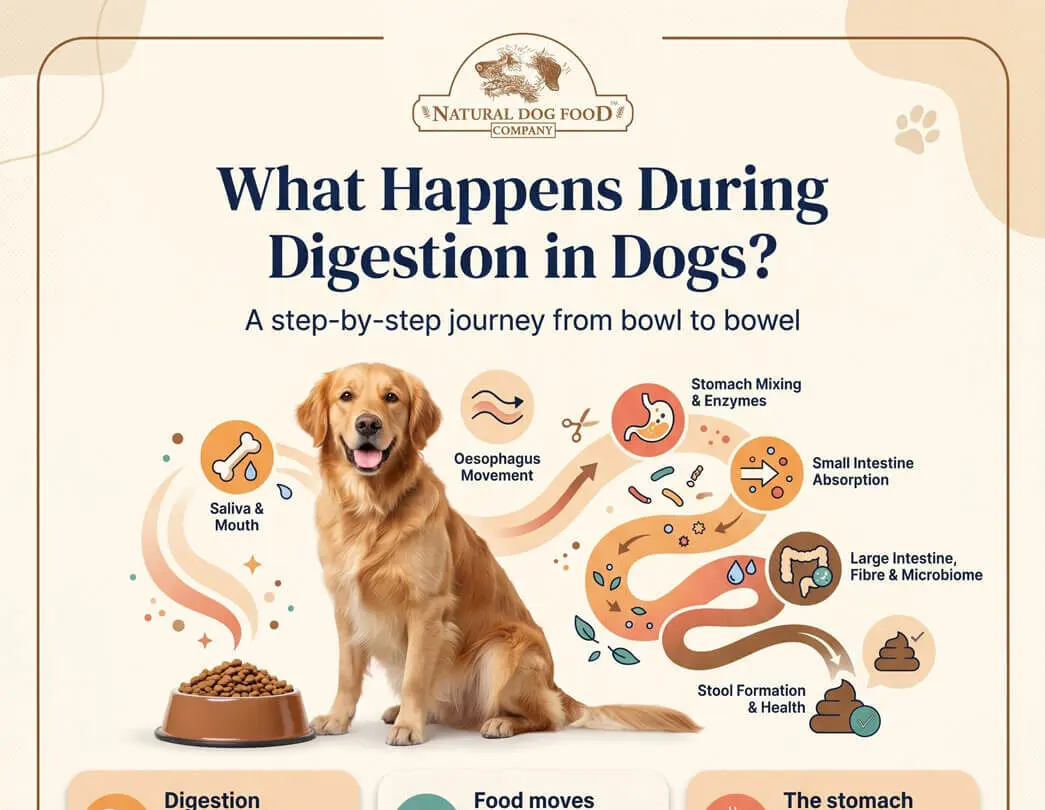

Digestion starts long before nutrients reach the bloodstream. It begins the moment a dog smells food, becomes interested, starts salivating and takes that first mouthful. To an owner, feeding may look simple: food goes in, energy comes out, waste leaves the body later. Inside the dog, however, digestion is a carefully coordinated process involving movement, acid, enzymes, bile, absorption, bacteria, water balance and waste formation.
The digestive system has several core jobs. It must take in food and water, move that food through the body, break it down into smaller usable parts, absorb nutrients, maintain fluid and electrolyte balance, and remove what the body does not need. These functions depend on motility, secretion, digestion, absorption, blood flow and metabolism all working together.
The beginning of digestion in dogs
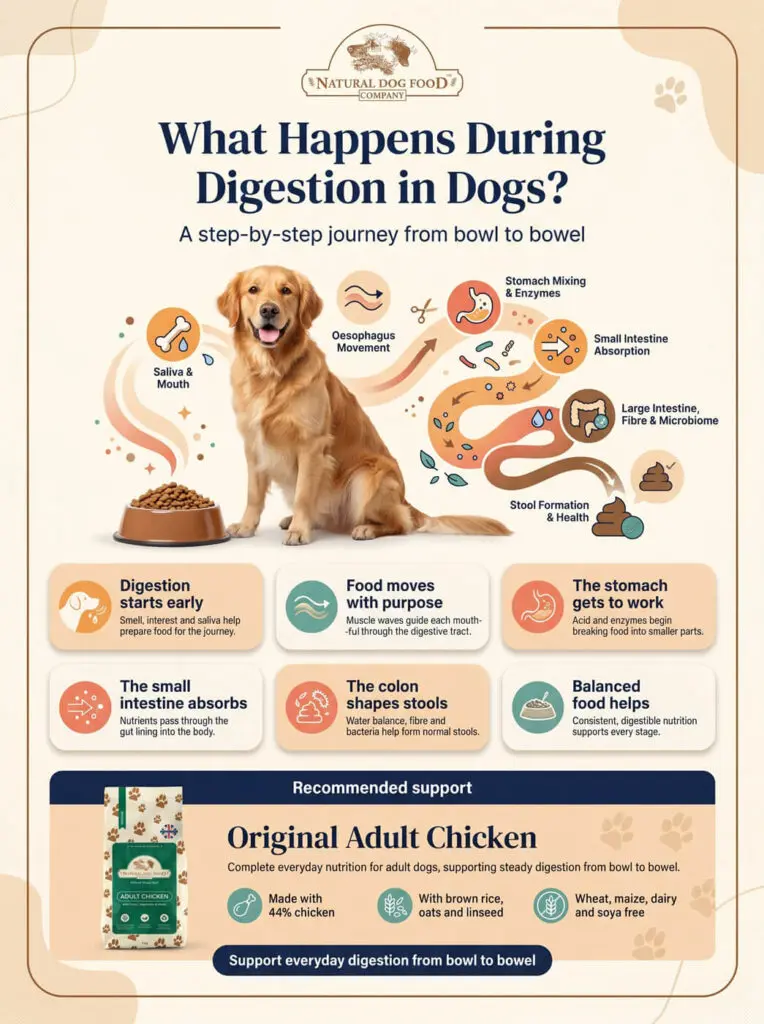
The first stage happens in the mouth. Dogs use their teeth to grip, tear and crush food, but they do not chew in quite the same slow, grinding way humans often do. Saliva helps moisten the food, making it easier to swallow and forming what is known as a bolus. At this stage, digestion is mostly mechanical. The food is being prepared for the journey rather than fully broken down.
Once swallowed, food moves into the oesophagus. This is the muscular tube that carries food from the mouth to the stomach. It does this through peristalsis: coordinated waves of muscle contraction that push food in the right direction. Peristalsis is one of the quiet miracles of digestion. It means food does not simply fall through the body by gravity. It is actively moved, controlled and directed.
The stomach is where digestion becomes more chemical. The stomach acts as a storage chamber, mixing bowl and acid bath. Its muscular walls churn food with gastric juices, while hydrochloric acid helps unfold proteins and create an environment where digestive enzymes can work. One important enzyme is pepsin, which begins breaking protein into smaller fragments called peptides.
This acidic environment also helps control many microorganisms swallowed with food. The stomach does not sterilise everything, but it forms an important first line of defence. At the same time, the stomach releases food gradually into the small intestine. This partly digested mixture is called chyme. The timing of stomach emptying can vary depending on meal size, fat content, fibre, hydration, activity and the individual dog.
The small intestine is the main site of digestion and nutrient absorption. It has three sections: the duodenum, jejunum and ileum. The duodenum receives chyme from the stomach and mixes it with digestive secretions from the pancreas, liver and intestinal wall. This is where the real biochemical dismantling of food happens.
How different orans play a role in digestion
Liver and pancreas function
The pancreas plays a central role. It releases digestive enzymes that help break down the major nutrients in food: proteins, fats and carbohydrates. Proteases break proteins into peptides and amino acids. Lipase helps break fats into fatty acids and glycerol. Amylase helps break starches into smaller sugars. Pancreatic enzymes are essential for normal assimilation of dietary nutrients, and a lack of these enzymes can lead to poor digestion and malabsorption.
The liver contributes through bile, which is stored in the gallbladder and released into the small intestine. Bile is particularly important for fat digestion. It helps emulsify fat, breaking it into smaller droplets so enzymes can work more efficiently. Without this step, fat would be much harder to digest and absorb.
Small and large intestine
The lining of the small intestine is beautifully designed for absorption. It is folded and covered in tiny projections called villi, which are themselves covered in even smaller microvilli. This creates a huge surface area. Nutrients can then pass through the intestinal lining and into the bloodstream or lymphatic system. Amino acids, simple sugars, minerals and many water-soluble nutrients enter the blood. Many fats are packaged differently and travel first through the lymphatic system.
The gut lining is not just a sponge for nutrients. It is also a barrier. The intestinal epithelial cells are joined by structures called tight junctions, which help control what passes through. This matters because every meal brings the outside world into the body. The gut must absorb what is useful while helping to keep out harmful organisms, toxins and unwanted substances.
After the small intestine has done most of the nutrient absorption, the remaining material moves into the large intestine. This includes water, electrolytes, fibre, bacteria, mucus, digestive residues and waste. The large intestine, including the colon, helps maintain fluid and electrolyte balance, absorbs water, provides an environment for normal intestinal bacteria and stores faeces before they leave the body.
The colon is where stool quality is shaped. If too much water remains, stools may be loose. Stools may become dry or hard if too much water is removed. This is why the balance of digestion earlier in the tract matters so much. Poorly digested food reaching the colon can affect bacterial fermentation, gas production, odour, urgency and stool consistency.
How does microbiome and food quality affect digestion?
The microbiome also plays an important role here. This is the community of bacteria and other microorganisms living in the digestive tract. Some fibres are fermented by these bacteria, producing short-chain fatty acids such as acetate, propionate and butyrate. These compounds help support the colon environment and provide energy for cells lining the large intestine.
Fibre is therefore not simply “roughage”. Different fibres behave in different ways. Some help add bulk or bind water, others are fermented by bacteria. The right fibre can support stool quality and digestive rhythm, while the wrong type or amount may leave some dogs gassy or unsettled. This is why good everyday nutrition needs balance, not just a long list of ingredients.
Protein quality matters too. Dogs need amino acids for muscle maintenance, tissue repair, immune function, enzymes, hormones and skin and coat renewal. Fat provides a concentrated energy source and helps with the absorption of fat-soluble vitamins. Carbohydrates can provide steady energy and useful fibre when chosen carefully. Vitamins and minerals support everything from nerve function to bone health and metabolism.
Why a good diet matters
This is where the food in the bowl becomes important. Digestion works best when the body receives consistent, digestible nutrition that supports each stage of the process. Sudden changes, rich extras, poor-quality ingredients or unnecessary fillers can make the system work harder. A steady, complete diet gives the digestive tract a reliable pattern to process.
For adult dogs who need dependable daily nutrition, Natural Dog Food Company Original Adult Chicken is a natural fit. It is made with 44% chicken, including 26% freshly prepared chicken, alongside brown rice, oats, linseed, sugar beet and brewer’s yeast. The recipe provides 22% protein, 12% oils and fats and 5% fibre, and is free from wheat, maize, dairy, soya, fillers and artificial ingredients.
Food does not need to be complicated to be effective. A good everyday recipe should provide quality protein, useful energy, balanced fibre and natural nutritional support that the dog’s body can actually use. Original Adult Chicken has been developed for fully grown dogs who need complete, steady nourishment: the kind of food that supports digestion not by forcing the gut to work harder, but by giving it ingredients it can process with confidence.
For more blog posts, visit our blog page!
Keep in touch: