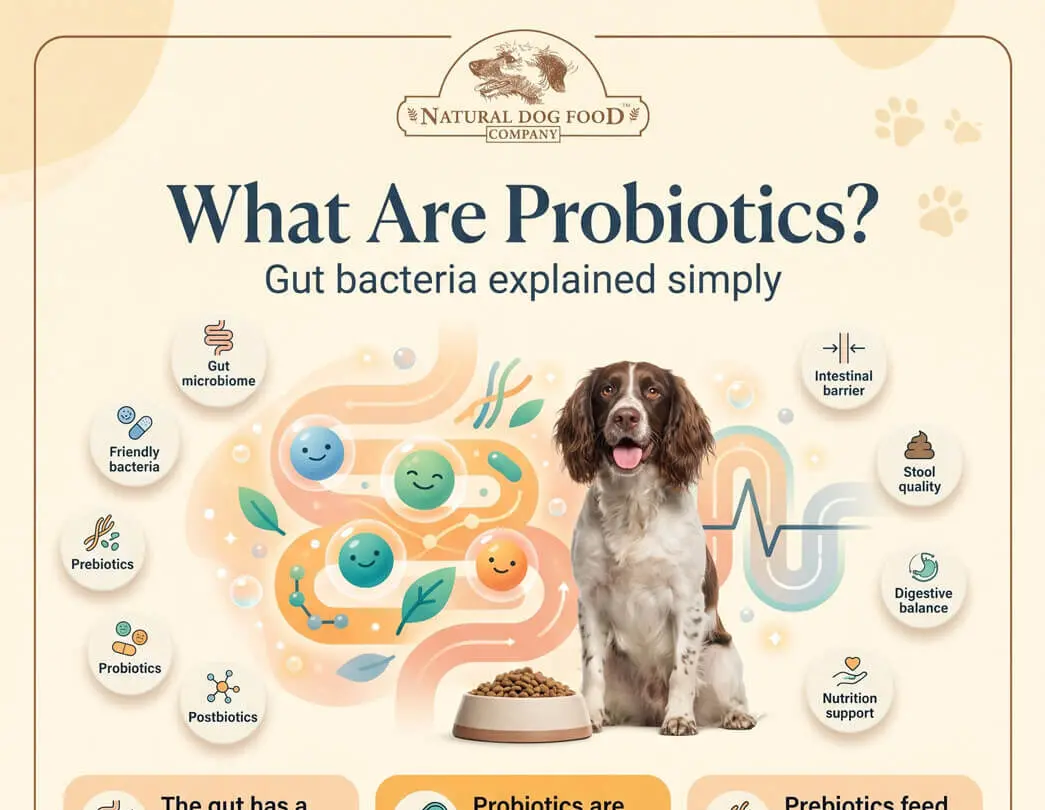

Probiotics are often talked about as though they are magic dust for the gut. A dog has loose stools, wind, gurgling, digestive sensitivity or has recently finished antibiotics, and the first thought is often: “Should we give them probiotics?”
It is a sensible question, but the answer is more interesting than a simple yes or no. Probiotics can be useful in the right circumstances, but they are only one part of a much bigger system. To understand whether dogs need them, we first need to understand the gut microbiome.
What is gut microbiome?
The gut microbiome is the community of microorganisms living inside the digestive tract. This includes bacteria, yeasts, viruses and other microscopic life forms. That may not sound appealing, but a healthy microbiome is not a sign of dirtiness or disease. It is part of normal biology. Dogs, like people, rely on a balanced community of gut microbes to help support digestion, stool quality, immune signalling and the health of the intestinal environment.
Most of these microorganisms live in the large intestine, particularly the colon. By the time food reaches this area, much of the protein, fat and carbohydrate digestion has already happened in the stomach and small intestine. What remains includes fibre, water, minerals, mucus, digestive residues and material that gut bacteria can ferment.
Fermentation is one of the key jobs of the microbiome. Certain bacteria break down fibres and other compounds that the dog cannot digest fully by itself. This produces substances called short-chain fatty acids, including acetate, propionate and butyrate. Butyrate is especially important because it helps feed the cells lining the colon and supports the health of the gut barrier. The microbiome is also involved in communication with the immune system and helps make the gut a less welcoming place for harmful organisms.
A healthy gut is therefore not just about the dog’s own cells. It is about the relationship between the dog, the food they eat and the microbes living inside them. When that relationship is stable, stools are usually more consistent, digestion is calmer and the gut lining is better supported. When it is disturbed, problems can follow.
What happens when gut microbiome is disrupted?
This disturbance is often called dysbiosis. Dysbiosis means the microbial balance has shifted away from normal. Some useful bacterial populations may reduce, while less helpful organisms may increase. This can happen after illness, stress, sudden diet change, scavenging, antibiotics or ongoing digestive inflammation. Dysbiosis can contribute to loose stools, wind, odour, poor stool quality and a more reactive digestive system.
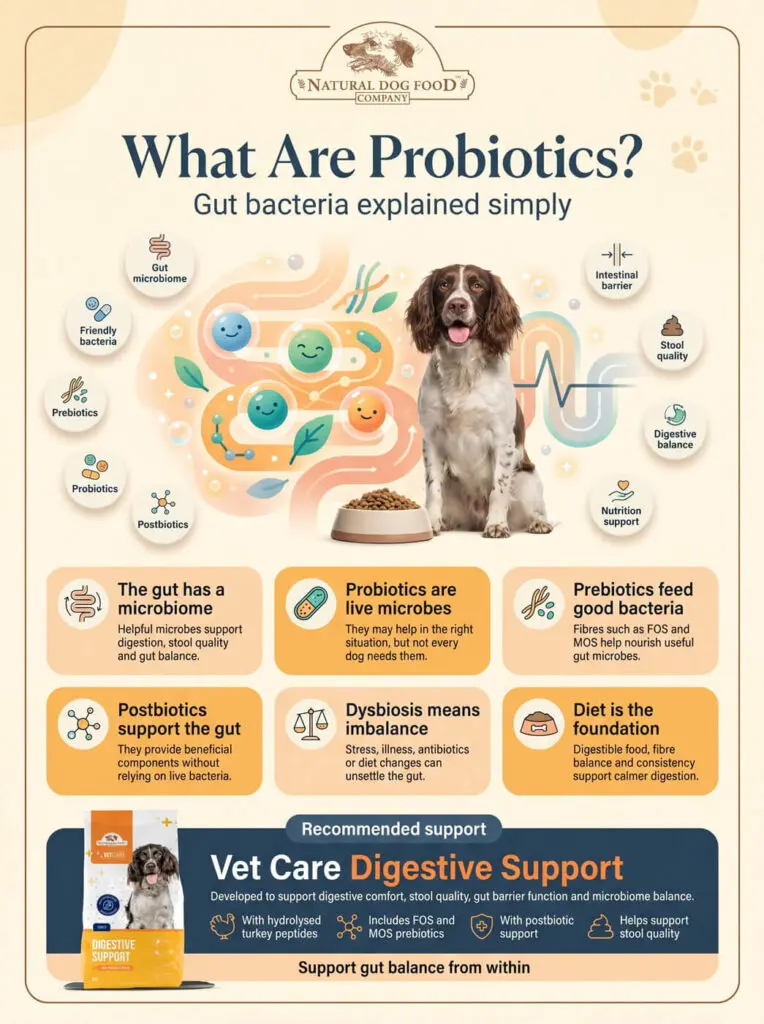
This is where probiotics enter the conversation. A probiotic is a live microorganism which, when given in the right amount, is intended to benefit the host. In simple terms, probiotics are “friendly bacteria” or yeasts added to the gut to support a healthier microbial balance. In veterinary medicine, vets may use probiotics to help support dogs with certain digestive problems, particularly some cases of diarrhoea or microbiome disruption.
Probiotics
However, not all probiotics are the same. This is one of the most important points for owners to understand. A probiotic is not defined only by the word on the tub. The strain, dose, condition and the dog matters. The product must also provide enough live organisms at the point of use, not just when it leaves the factory.
Different bacterial strains can behave differently. One strain may support stool quality. Another may have a different effect, or no useful effect at all for that individual dog. This is why it is too simplistic to say “all dogs need probiotics” or “probiotics always work”. The evidence is more nuanced. Probiotics and prebiotics can support canine intestinal health in several ways, but results can depend on the dog, the product and the reason they are being used.
The difference between probiotics, prebiotics and postbiotics.
Probiotics are live beneficial microorganisms.
Prebiotics are food sources for beneficial gut bacteria. They are usually specific fibres or compounds that help nourish useful microbial populations already living in the gut. Common examples in pet nutrition include FOS and MOS. Rather than adding bacteria directly, prebiotics help support the bacteria already present.
Postbiotics are beneficial components produced by microorganisms. They are not live bacteria. They may include compounds such as amino acids, nucleotides, cell wall fragments and metabolites that can still have useful effects in the gut. This is an important area of digestive nutrition because postbiotics can support the gut environment without relying on live organisms surviving storage, stomach acid and intestinal passage.
This distinction matters because a dog does not always need a separate probiotic supplement to support the microbiome. Sometimes the more useful approach is to feed a diet that supports the entire digestive environment: digestibility, fibre balance, gut barrier function, immune signalling and microbial stability.
Diet and microbiome
Diet has a direct effect on the microbiome because food supplies the material gut bacteria use. Highly digestible food leaves less poorly digested residue to arrive in the colon. That can reduce unnecessary fermentation, gas and stool inconsistency. Carefully selected fibres can help support stool formation and microbial balance. Consistent feeding also matters, because the microbiome adapts to what the dog eats regularly. Constant changes in food, treats and extras can keep the gut in a state of adjustment.
Protein
Protein digestibility is another important part of this. If protein is poorly digested in the small intestine, more of it can reach the colon. There, bacteria may ferment it in ways that produce stronger odours and less desirable compounds. Highly digestible protein helps the dog use more of the nutrition earlier in the digestive tract, reducing the burden on the lower gut.
Gut lining
The gut lining also deserves attention. The intestinal barrier is made up of epithelial cells joined by tight junctions. These tight junctions act rather like controlled gates, helping useful nutrients pass through while limiting the movement of unwanted substances. Irritation or inflammation in the gut barrier can make the gut more reactive.Supporting the barrier is therefore part of supporting digestive stability, not a separate issue.
So, do dogs really need probiotics? Some dogs may benefit from them, particularly during or after certain digestive disturbances, but they are not automatically necessary for every healthy dog. A dog with normal stools, good appetite, steady digestion and no signs of gut upset may not need a separate probiotic supplement at all. For many dogs, the better foundation is a consistent, complete and highly digestible diet that supports the microbiome naturally.
Treatment and probiotics for digestive issues
Where a dog has recurring loose stools, wind, digestive sensitivity, recent antibiotic use or repeated flare-ups, it is sensible to think more carefully about gut support. That may include veterinary advice, stool testing if needed, parasite control, reviewing treats and extras, and choosing a diet designed to reduce digestive stress.
This is where Natural Dog Food Company Vet Care Digestive Support fits. It is not simply a food with a fashionable gut-health claim. It has been developed around the wider science of digestive support, using hydrolysed turkey peptides for digestibility and low antigenic potential, collagen peptides to support the intestinal barrier, postbiotic components to help nourish the microbiome and immune responses within the digestive system, and lignocellulose fibre to help support stool quality. The recipe also includes FOS and MOS, and is formulated to support healthy digestion, nutrient absorption and overall gut wellbeing.
Owners should not treat food as a replacement for veterinary care. They should always discuss persistent diarrhoea, blood in the stool, vomiting, weight loss, dehydration, loss of appetite, lethargy or repeated digestive flare-ups with a vet. But for dogs who need daily digestive support, the food in the bowl is one of the most powerful tools owners have.
Probiotics can have their place, but gut health is bigger than a probiotic alone. A calmer digestive system depends on good ingredients, digestibility, fibre balance, microbial support, a strong intestinal barrier and consistency over time. When those pieces work together, the microbiome has a better chance of doing what it is meant to do: support digestion quietly, steadily and every day.
For help and advice on diarrhoea in dogs and puppies, visit our blog post.
For more blog posts, visit our blog page!
Keep in touch: