
If your dog struggles with allergies or sensitive digestion, you’re probably familiar with the frustration of finding a food that doesn’t trigger symptoms. At the Natural Dog Food Company, we regularly hear from pet owners seeking advice on how best to manage their dog’s dietary sensitivities. One increasingly popular solution is hydrolysed dog food. But what exactly is it, and could it help your dog?
In this comprehensive guide, we’ll answer your questions, unpack the science behind hydrolysed proteins, and help you understand whether this specialised food could be the right choice for your furry companion.
What is hydrolysed dog food and how is it made?
The science behind hydrolysed protein
Hydrolysed dog food contains proteins that have been scientifically broken down into smaller components through a process called enzymatic hydrolysis. This involves using natural enzymes to split proteins into tiny peptides, reducing the risk of triggering allergic reactions.
The reason this matters is simple: dogs with allergies often react to specific proteins. By breaking these proteins down into smaller molecules, the food becomes far less likely to provoke an immune response.
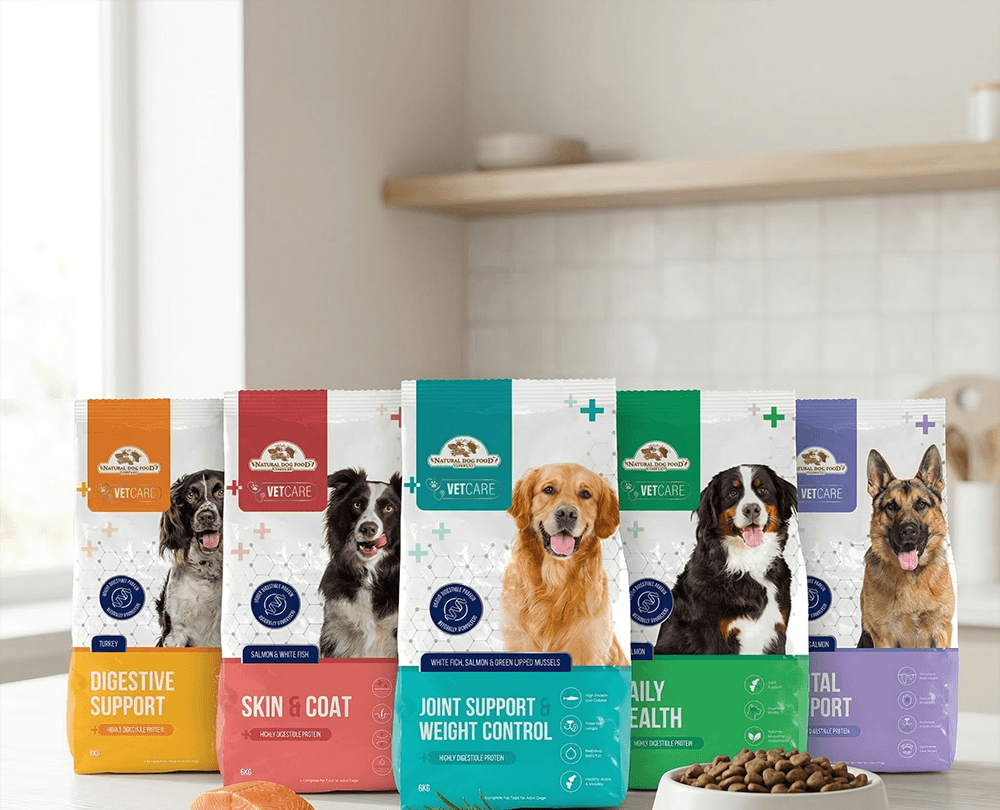
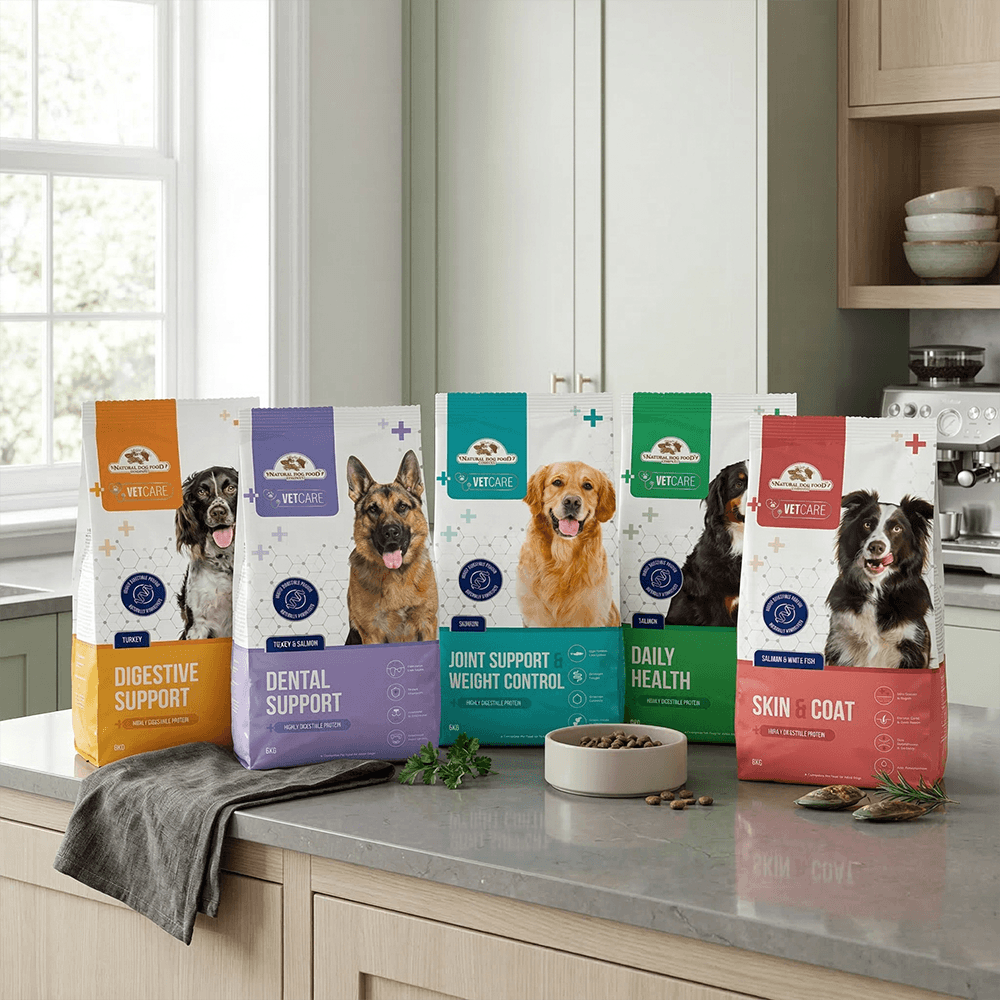
At Natural Dog Food Company, our Vet Care range is crafted using enzymatically hydrolysed proteins, carefully designed for dogs with severe allergies and sensitivities, providing maximum digestibility and minimal allergenic risk.
How does hydrolysed protein differ from regular protein in dog food?
Regular dog food typically contains whole proteins like chicken, beef, or fish. These proteins can be recognised by a dog’s immune system as allergens, particularly if the dog has food sensitivities.
Hydrolysed proteins, however, are dramatically smaller, making it difficult for your dog’s immune system to recognise and react to them. This greatly reduces allergic reactions and digestive discomfort, helping your dog to feel comfortable again.
Is hydrolysed dog food the same as hypoallergenic dog food?
Not exactly. While both diets aim to reduce allergies, they use different methods. Hypoallergenic diets often contain novel proteins (such as venison or salmon) or limited ingredients to avoid common allergens. Hydrolysed foods, on the other hand, actively break down proteins at a molecular level.
For dogs with severe allergies or those who’ve not improved on standard hypoallergenic foods, hydrolysed diets—like our Vet Care range—often prove more effective.
Why do dogs need hydrolysed food – what conditions does it treat?
Dog allergies
Food allergies are one of the primary reasons veterinarians recommend hydrolysed dog food. Common symptoms include itchy skin, recurring ear infections, digestive disturbances, and general discomfort after eating. Hydrolysed proteins significantly reduce these reactions by minimising immune recognition.
Inflammatory bowel disease (IBD)
Dogs suffering from conditions like IBD often respond positively to hydrolysed foods, as smaller protein fragments are easier to digest, helping reduce inflammation and improving nutrient absorption.
Other conditions that benefit from hydrolysed food
Dogs with persistent skin issues linked to diet benefit greatly from hydrolysed foods, as dietary triggers are dramatically reduced, resulting in healthier skin and coats.
Other condition which might benefit from a hydrolysed protein diet include Pancreatitis, dermatitis and chronic digestive issues, this diet is also beneficial as a post-surgery diet.
What are the signs my dog might need hydrolysed food?
Digestive symptoms
- Chronic diarrhoea or loose stools
- Vomiting after meals
- Excessive gas or bloating
- Loss of appetite
Skin and coat symptoms
- Itchy skin and excessive scratching
- Hot spots or skin lesions
- Dull or thinning coat
- Ear infections
Behavioural changes
- Lethargy after eating
- Food avoidance behaviours
- Increased anxiety around meal times
What is the best hydrolysed dog food?
When choosing a hydrolysed food, prioritise products that clearly state they contain enzymatically hydrolysed proteins, ideally from trusted sources. Ensure the food meets FEDIAF nutritional standards, indicating complete nutritional adequacy for your dog’s health.
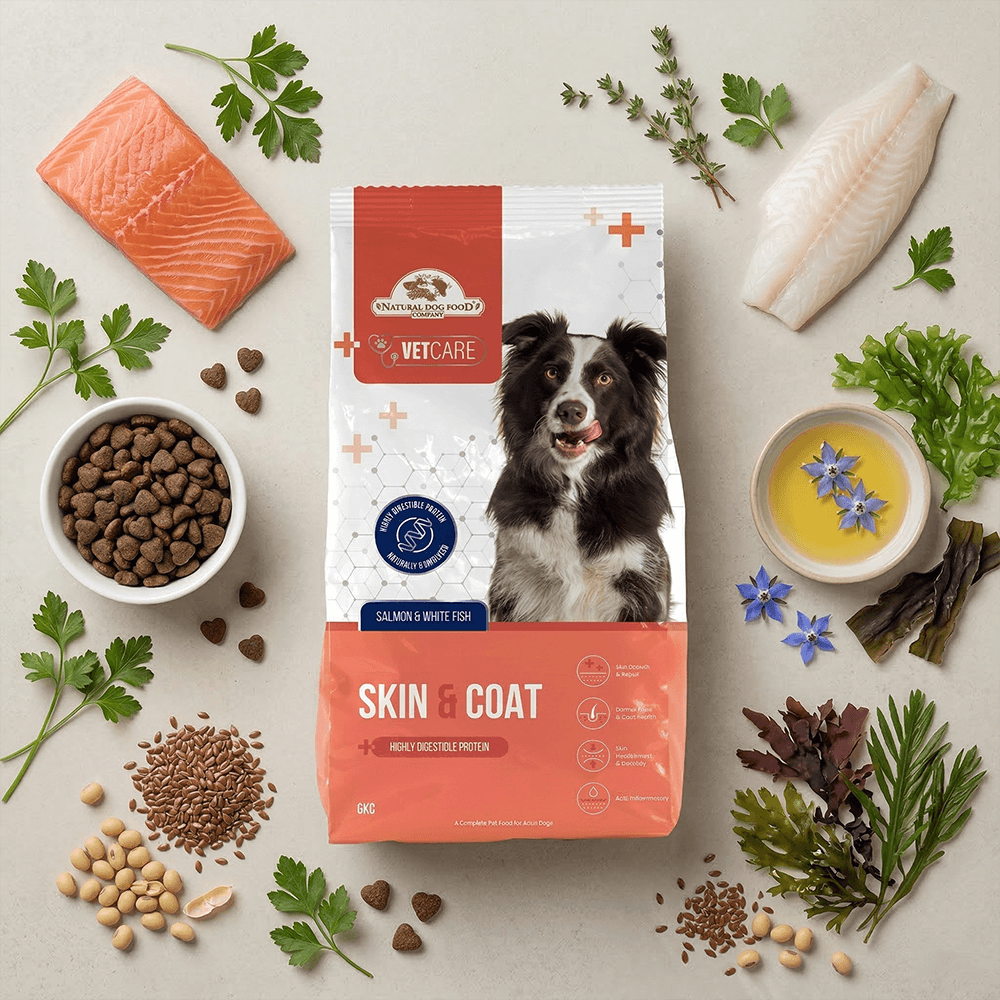
Our Vet Care range at Natural Dog Food Company is a great example, providing meticulously formulated recipes tailored to sensitive dogs.
What’s the difference between prescription and over-the-counter hydrolysed foods?
Hydrolysed foods adhere to strict veterinary and manufacturing standards, ensuring consistent protein breakdown and minimising cross-contamination. While prescription options typically come with higher costs through veterinary surgeries, they’re often necessary for managing severe allergies or chronic conditions effectively.
Are there different types of hydrolysed proteins?
Hydrolysed dog foods typically use proteins derived from chicken, soy, or fish, enzymatically broken down to reduce allergenic potential. Novel proteins, such as fish, may be preferable for dogs with sensitivities to common proteins like chicken.
How do I know if the hydrolysed food is working?
Most dogs show improvement within 3–6 weeks, although initial benefits can sometimes be seen sooner. Track your dog’s symptoms closely, and consult your veterinarian if you don’t observe noticeable progress within this timeframe.
Transitioning to hydrolysed dog food
Introduce the new diet gradually over 7–10 days, mixing progressively larger amounts of hydrolysed food with your dog’s current diet. A gradual transition helps prevent digestive upsets and increases acceptance. For a more in depth transition guide see our blog post, How to switch dog food: a gentle guide.
Working with your veterinarian
Maintaining a good relationship with your vet is crucial. Regular check-ups and occasional dietary assessments help ensure your dog’s nutritional needs are met and symptoms stay under control.
Can I give treats to a dog on hydrolysed food?
Yes, but choose carefully. Opt for single-ingredient or single type protein (e.g. fish, poultry) treats to avoid accidentally triggering allergic reactions. Always ensure treats complement the hydrolysed diet rather than undermine it.
At Natural Dog Food Company, we offer treats specifically formulated for sensitive dogs—perfect companions to a hydrolysed diet. Click here to view our range.
Can my dog eat hydrolysed food long term?
Hydrolysed diets are safe for long-term feeding, meeting all nutritional requirements established by FEDIAF guidelines.
Are there any side effects of hydrolysed dog food?
Although rare, some dogs may initially hesitate due to the different taste or texture. However, most quickly adapt, especially with gradual introductions.
While sensitivities and allergies are difficult to deal with and often there feels like there are now options, in the majority of cases symptoms can be managed with a carefully selected diet.
Hydrolysed dog food provides a scientifically proven solution for managing allergies and digestive sensitivities. With its carefully broken-down proteins, your dog can experience greater comfort, fewer symptoms, and improved quality of life.
Explore our Vet Care range today to discover how Natural Dog Food Company’s hydrolysed diets can help your furry friend thrive. Remember, you’re not alone—dietary solutions exist, and we’re here to support you every step of the way.
Frequently asked questions
Is hydrolysed protein dog food best for dogs with chicken or egg allergy?
Hydrolysed protein reducing the risk of reactions, while some dogs may now be able to eat chicken, other may benefit from an alternative protein source.
For example Vet Care Daily Health provides all the benefits from a hydrolysed diet using high quality Salmon ingredients.
Can puppies eat hydrolysed dog food?
Yes, provided the food meets regulatory standards for puppies, look for age-appropriate formulas. Always consult your vet if you have concerns.
What about multi-dog households – can all dogs eat hydrolysed food?
Yes, although it can be cost-prohibitive for dogs without sensitivities. Consider feeding separately or combining with other diets if appropriate. View our full range of Natural Dog Food.
Are there hydrolysed options for dogs with specific dietary needs (grain-free, etc.)?
Is hydrolysed food safe for dogs with other health conditions?
Usually, yes, but always consult your vet to coordinate with existing treatments.
What should I do if my dog refuses to eat hydrolysed food?
Try mixing small amounts initially, warming slightly, or a small amount of warm water. Patience usually pays off, but consult your vet if challenges persist.
How long does it take to see results from hydrolysed dog food?
Generally you should start to see changes within 4-6 weeks however you could see changes sooner depending on the severity and type of allergy.
For more blog posts, visit our blog page!
For more blog posts, visit our blog page!
Keep in touch: