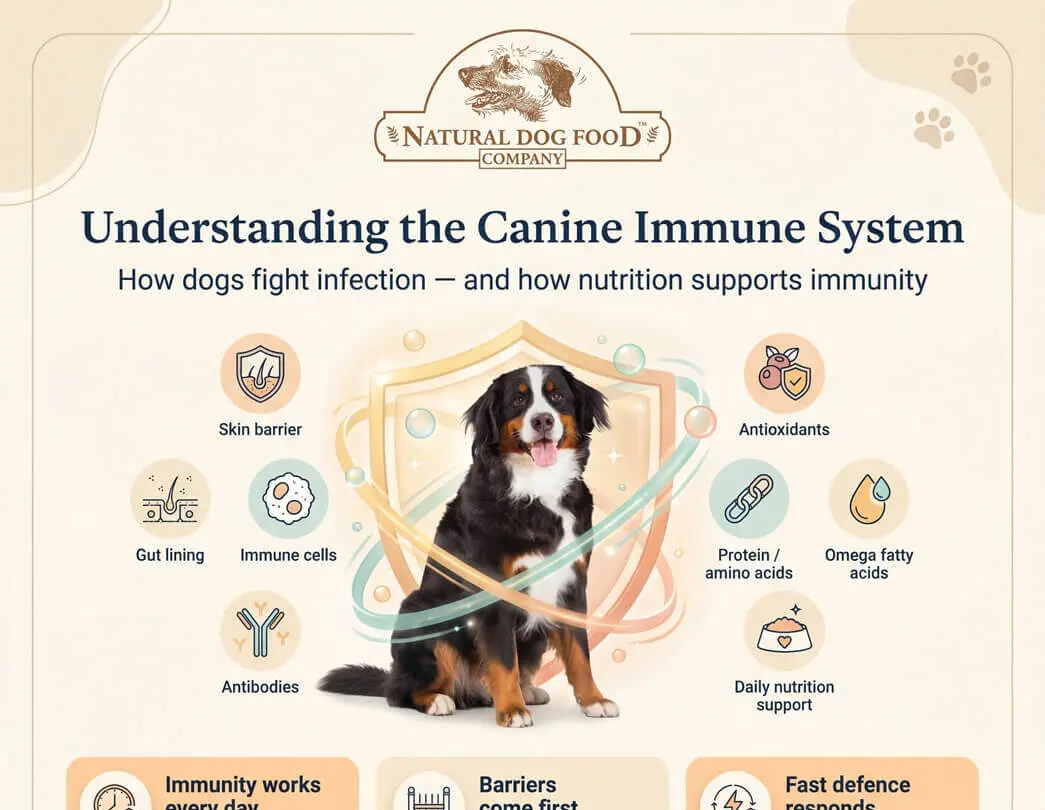

What is a canine immune system?
The immune system is one of the most important defence systems in a dog’s body, but it is often misunderstood. Owners may only think about immunity when a dog is unwell, recovering from an infection, or having vaccinations. In reality, the immune system is working quietly all the time.
The immune system helps protect the body from bacteria, viruses, parasites, fungi and damaged cells. It also helps repair tissues after injury and communicates with the gut, skin, lymph nodes, bone marrow, spleen and bloodstream. It also has to make careful decisions every day: what should be attacked, what should be tolerated, and when should an immune response be switched off.
Why immune balance matters in dogs
This balance matters. A weak immune response may leave the body less able to deal with infection. An overactive or poorly regulated immune response can contribute to inflammation, allergies or unnecessary tissue damage. Good immunity is not simply about being “strong”. It is about being accurate, responsive and well controlled.
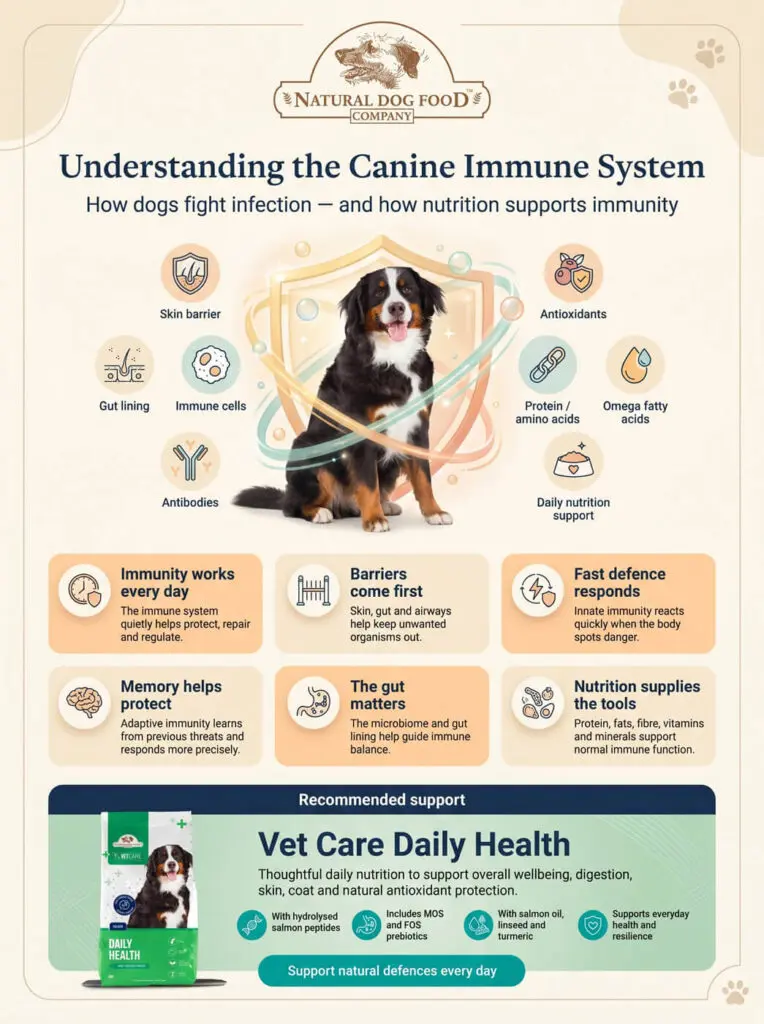
The immune system is usually divided into two main parts: innate immunity and adaptive immunity. Innate immunity is the fast, general defence system. Adaptive immunity is slower to develop, but more specific and capable of memory. Both systems work together to protect the dog.
Innate immunity – a dog’s first line of defence
Innate immunity is the first line of defence. It includes physical barriers such as the skin, the lining of the gut and the lining of the airways. These surfaces are important because they stand between the outside world and the body’s internal environment. Intact skin is difficult for most microorganisms to penetrate, while mucus, normal bacteria and immune cells help protect mucosal surfaces such as the gut and respiratory tract.
How dogs bodies recognise infection and harmful organisms
If a harmful organism gets past these barriers, innate immune cells respond quickly. Cells such as neutrophils, macrophages, dendritic cells and mast cells can recognise common warning patterns found on microbes or damaged cells. These warning signals are known as pathogen-associated molecular patterns and damage-associated molecular patterns, often shortened to PAMPs and DAMPs. Immune cells detect them using pattern-recognition receptors, including toll-like receptors.
Inflammation in dogs
Once these receptors are triggered, the body begins an inflammatory response. Inflammation is not automatically a bad thing. It is one of the ways the body sends blood, immune cells and chemical signals to an area where help is needed. The area may become warmer, redder, swollen or painful because blood flow and immune activity have increased.
Neutrophils are often among the first cells to arrive. They engulf invading bacteria through a process called phagocytosis and use highly reactive chemicals to kill them. Macrophages follow, clearing microbes, damaged tissue and spent immune cells. This clean-up stage is important because the body must remove the remains of the battle before proper repair can begin.
Adaptive immunity – targeted protection and immune memory
Adaptive immunity is more targeted. It relies mainly on lymphocytes: B cells and T cells. B cells produce antibodies, which are proteins designed to recognise and bind to specific foreign molecules. Antibodies can help mark bacteria, viruses and other invaders for destruction. T cells have several roles. Some help coordinate immune responses, some regulate the response, and cytotoxic T cells can kill virus-infected or abnormal cells.
One of the most remarkable features of adaptive immunity is memory. After the immune system has encountered a particular antigen, some B cells and T cells become memory cells. If the dog meets the same threat again, the response can be faster and more effective. This is the principle behind vaccination: the immune system is trained to recognise a threat without the dog having to suffer the full disease.
How immune cells communicate
The immune system also communicates using cytokines. These are signalling proteins that help immune cells coordinate what should happen next. Some cytokines promote inflammation, some attract immune cells to a particular area, and others help calm the response once the threat has passed. This regulation is essential. The immune system must be powerful enough to protect the dog, but controlled enough to avoid unnecessary damage.
The gut and the immune system in dogs
The gut is especially important to immune health. Every meal brings the outside world into the body, so the digestive tract needs to absorb useful nutrients while helping to keep unwanted organisms and substances out. The gut lining, microbiome and gut-associated immune tissue are all involved in this process. The resident microbiota in the gut also helps exclude potential pathogens and influences the development and regulation of immune responses.
How nutrition supports a dog’s immune system
This is where nutrition becomes highly relevant. The immune system is active, cellular and protein-dependent. Immune cells need energy to divide, move, signal and respond. Antibodies, cytokines, enzymes and many barrier structures depend on amino acids. Skin and intestinal cells are constantly renewing, and that renewal requires a reliable supply of nutrients.
Protein
Protein quality therefore matters. Highly digestible protein provides amino acids that the body can use for tissue maintenance, immune cell function and repair. If protein is difficult to digest or poorly tolerated, the body may not make efficient use of it. In sensitive dogs, certain larger protein structures can also be more likely to trigger unwanted immune recognition. This is one reason advanced nutritional recipes can use hydrolysed proteins effectively.. Hydrolysis breaks protein into smaller peptide chains, supporting digestibility and helping reduce antigenic potential.
Fatty Acids
Fatty acids also influence immune and inflammatory processes. Omega-3 fatty acids, including EPA and DHA, are associated with natural anti-inflammatory support. Omega-6 fatty acids are essential too, particularly for skin barrier function and normal cell membrane structure. The aim is not to remove inflammation altogether, because inflammation is a necessary defence mechanism. The aim is to support a more balanced response.
Antioxidants
Antioxidants are another important part of the picture. During normal immune activity, the body produces reactive molecules as part of its defence system. These can help kill microbes, but if oxidative stress becomes excessive, cells and tissues can be damaged. Antioxidant nutrients help support the body’s ability to manage oxidative stress and protect normal cellular function.
Prebiotics
Prebiotics support immunity through the gut. They provide nourishment for beneficial gut bacteria, helping support microbial balance. A healthier microbial environment can influence stool quality, gut barrier integrity and immune signalling. This matters because the digestive tract is one of the immune system’s busiest contact points with the outside world.
Vitamins and Minerals
Minerals and vitamins also play precise roles. Zinc is involved in skin integrity, wound healing and immune function. Copper, manganese and iron contribute to enzyme systems and normal metabolism. Vitamins A, D and E are involved in epithelial health, immune regulation and antioxidant protection. These nutrients are needed in the right amounts, not excessive amounts, which is why a complete and balanced diet is safer than random supplementation.
Supporting everyday immunity with Vet Care Daily Health
For dogs who need thoughtful everyday nutritional support, Natural Dog Food Company Vet Care Daily Health has been developed around these principles. It uses hydrolysed salmon peptides, collagen peptides, prebiotics MOS and FOS, salmon oil, coconut oil, turmeric, orange, linseed, carrot, chamomile and seaweed in a grain-free recipe designed to support overall wellbeing, healthy ageing, digestion, skin and coat condition, cognitive function and natural antioxidant protection. The recipe provides 24% protein, 15.5% fat and includes added vitamins, minerals and L-carnitine.
Can Dog Food Support Immunity?
Food is not a medicine, and it should not be presented as a cure for infection or immune disease. But nutrition is one of the foundations the immune system depends on every day. A well-formulated diet can supply the amino acids, fats, fibre, antioxidants, vitamins and minerals needed to support normal immune function, healthy barriers and everyday resilience.
When to Speak to a Vet About Your Dog’s Immune Health
Veterinary advice should always be sought if a dog has repeated infections, unexplained weight loss, persistent lethargy, chronic diarrhoea, skin wounds that do not heal, recurrent ear or skin problems, fever, swelling, unusual lumps or any sudden change in health. These signs may need proper investigation rather than dietary support alone.
The Quiet Value of Good Daily Nutrition
A healthy immune system is not one that reacts to everything. It is one that knows when to defend, when to tolerate and when to stand down. When the skin barrier, gut lining, microbiome, immune cells and nutrient supply are all well supported, the body has a better chance of doing that job calmly and effectively. That is the quiet value of good daily nutrition: it gives the dog’s natural defences the tools they need to work as they should.
For more blog posts, visit our blog page!
Keep in touch: