
Pancreatitis is one of those conditions that can come on quickly and make a dog feel very unwell. A dog may suddenly go off their food, vomit, seem quiet, develop diarrhoea, hunch their back, or appear uncomfortable when their abdomen is touched. Although some dogs look only mildly unsettled, others become seriously ill and need urgent veterinary care.
What is pancreatitis?
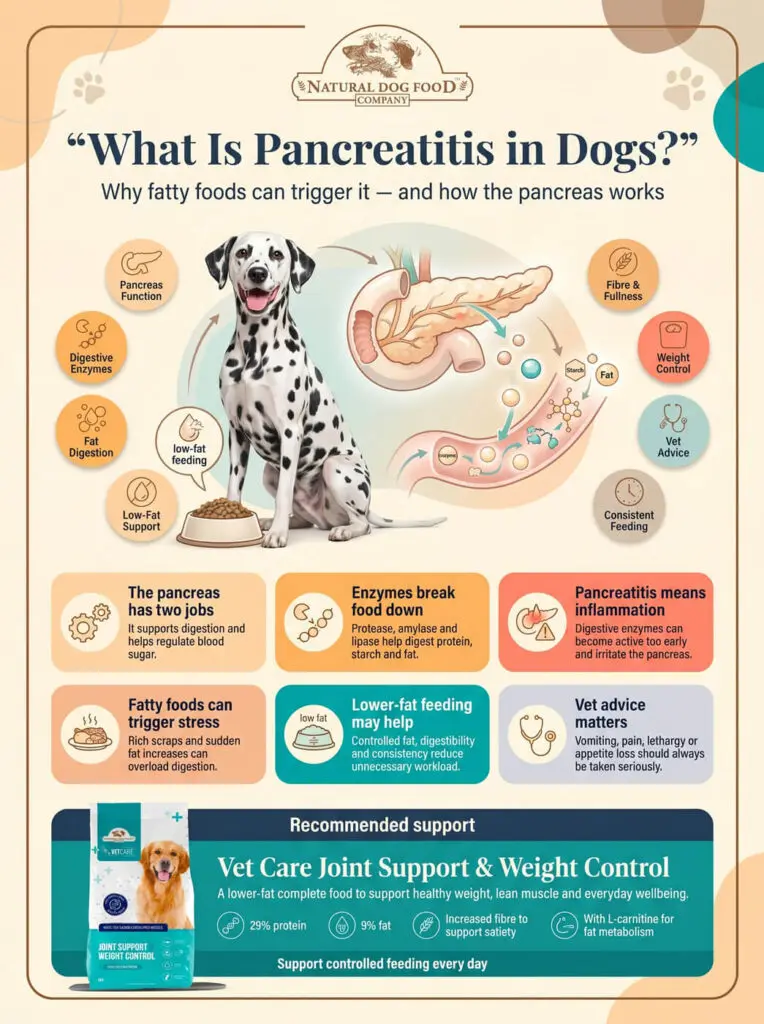
The word pancreatitis simply means inflammation of the pancreas. The pancreas is a small but important organ that sits close to the stomach and small intestine. It has two main roles. The first is digestive: it produces enzymes that help break food down. The second is hormonal: it produces hormones such as insulin and glucagon, which help regulate blood sugar.
The digestive role is the one most closely linked to pancreatitis. After a dog eats, the pancreas releases digestive enzymes into the small intestine. These enzymes help break down protein, carbohydrate and fat into smaller pieces that the body can absorb and use. Proteases break proteins into peptides and amino acids. Amylase helps break down starch. Lipase helps break down fat.
Under normal conditions, the body carefully controls these enzymes. The pancreas produces them in inactive or protected forms, and they should only become active once they reach the intestine. Pancreatitis develops when this control system breaks down and digestive enzymes activate too early, inside or around the pancreas itself. In simple terms, the pancreas begins to suffer damage from the very enzymes it normally uses to digest food.
This early enzyme activation can trigger inflammation, swelling, pain and tissue injury. The immune system responds by sending inflammatory cells and chemical signals to the area. In mild cases, inflammation may remain limited. However in more serious cases, the effects can spread to surrounding tissues and contribute to wider illness. Pancreatitis can be acute, meaning it comes on suddenly, or chronic, meaning there is longer-term or repeated inflammation. Low-fat feeding is crucial in dogs with pancreatitis, particularly as part of treatment success.
What triggers pancreatitis?
Fatty foods are one of the best-known triggers. It is advised to avoid rich leftovers, roast dinner trimmings, sausages, bacon, cheese, butter, gravy and scraps from the table. These foods may feel like a treat, but they can place sudden pressure on the digestive system.
Fat takes more digestive work. It stimulates the release of pancreatic enzymes and bile, and it can slow stomach emptying. For a healthy dog, a suitable level of fat in a complete food is normal and necessary. Dogs need fat for energy, cell membranes, skin health, coat condition and the absorption of fat-soluble vitamins. The problem is not fat itself. The problem is excess fat, sudden fat increases, or rich foods given to a dog whose pancreas cannot cope with that challenge.
This is an important distinction, a controlled complete diet is very different from fatty human leftovers as one is formulated, the other is unpredictable. Pancreatitis risk often rises when the dog receives a sudden high-fat load that the digestive system was not prepared for. Overly rich foods can irritate the pancreas and contribute to pancreatitis.
What are the symptoms of pancreatitis?
Not every case has an obvious cause. Some dogs develop pancreatitis without a clear dietary trigger. Body condition, breed tendency, age, certain medications, other health conditions, high blood fats, previous episodes of pancreatitis and diet can all influence risk.. Dogs who have had pancreatitis before may be more vulnerable to future flare-ups, which is why long-term feeding habits matter.
Signs can vary, but dogs commonly show vomiting, nausea, loss of appetite, abdominal pain, diarrhoea, fever and lethargy. Some dogs adopt a stretched “prayer position”, with the front end lowered and the back end raised, because this may ease abdominal discomfort. Severe cases can lead to dehydration, weakness and collapse. Pancreatitis can cause significant pain, so owners should always take suspected cases seriously.
A vet should make the diagnosis. Vomiting and abdominal pain can have many causes, including intestinal obstruction, infection, liver disease, poisoning, inflammatory bowel disease or other digestive disorders. A vet may examine the abdomen, assess hydration, run blood tests and use specific pancreatic tests or imaging where needed.
How do you treat pancreatitis?
Treatment depends on severity. Many dogs need supportive care such as pain relief, anti-sickness medication, fluid support and carefully managed feeding. In mild cases, vets commonly move dogs onto a low-fat diet and low-fat treats while they investigate and manage underlying risk factors.
Diet is central because the pancreas responds directly to what enters the digestive tract. For dogs recovering from pancreatitis, the aim is to reduce workload for the body. This usually means controlled fat, good digestibility, sensible portions, consistent feeding and avoiding rich extras completely. A dog who has recovered well can still be tipped back into trouble by one fatty treat.
Protein still matters. The body needs amino acids for repair, muscle maintenance, immune function and normal metabolism. The goal is not simply to remove nutrition. The goal is to provide food the body can use efficiently without overloading the pancreas. Highly digestible nutrition is valuable because it helps the dog absorb more of what they need while reducing unnecessary digestive burden.
Body condition is another important part of the picture. Dogs carrying excess weight may be at greater risk of metabolic strain and may also be more prone to reduced activity. Weight control is not about making a dog thin. It is about reducing unnecessary pressure on the body and helping the dog maintain healthier internal function.
Can a natural diet help?
This is why, from our own range, Natural Dog Food Company Vet Care Joint Support & Weight Control is the recommended for dogs who need a lower-fat option. It provides 29% protein and 9% fat, with increased fibre at 8.5% to support satiety. It also includes L-carnitine to support fat metabolism, hydrolysed fish peptides, collagen peptides and Green Lipped Mussel. This recipe has been developed to help dogs feel fuller, support lean muscle mass, encourage healthy fat metabolism and assist with weight control, while also supporting the joints that carry them through daily life.
It is important to be clear: this food is not a treatment for pancreatitis and should not replace veterinary care. Owners should follow their vet’s advice for dogs with confirmed pancreatitis, especially if strict fat restriction is required. However, where a lower-fat complete food is appropriate, choosing the lowest-fat option in the range is a logical step for reducing unnecessary dietary fat while still feeding a complete recipe.
Prevention and when to contact the vet
Prevention is often about avoiding the obvious mistakes. No fatty scraps, rich leftovers. No sudden treat changes and no “just this once” roast dinner trimmings. Consistency matters because the pancreas does not enjoy surprises. A steady, controlled diet gives the digestive system a more predictable workload.
Veterinary advice should always be sought if a dog is vomiting repeatedly, refusing food, painful, lethargic, bloated, dehydrated, passing diarrhoea, weak, collapsed, or behaving unusually after eating something rich or fatty. Pancreatitis can range from mild to life-threatening, and early treatment can make a significant difference.
The pancreas is easy to forget when everything is working well. It quietly releases enzymes, supports digestion and helps regulate blood sugar every day. But when it becomes inflamed, the whole dog can feel the effects. By understanding how the pancreas works, why fatty foods can trigger problems and why lower-fat feeding matters, owners can make better choices that support comfort, recovery and long-term digestive health.
For more blog posts, visit our blog page!
For more blog posts, visit our blog page!
Keep in touch: