

Vaccination is one of the most important ways we protect dogs from serious infectious disease. A small injection at the veterinary practice may seem simple, but inside the body it begins a highly organised immune process. The immune system learns, remembers and prepares itself, so that if the real disease appears later, the dog has a much better chance of responding quickly and effectively.
To understand vaccines, it helps to understand the immune system. A dog’s body is constantly defending itself from bacteria, viruses, parasites and other organisms. Some defences are immediate and general, such as the skin, the gut lining, mucus, stomach acid and fast-acting immune cells. This is known as innate immunity.
Other defences are more specific, this is known as adaptive immunity. It involves specialised immune cells that can recognise particular threats, produce antibodies and form memory cells. Vaccination works mainly by training this adaptive immune system.
How do vaccines work?
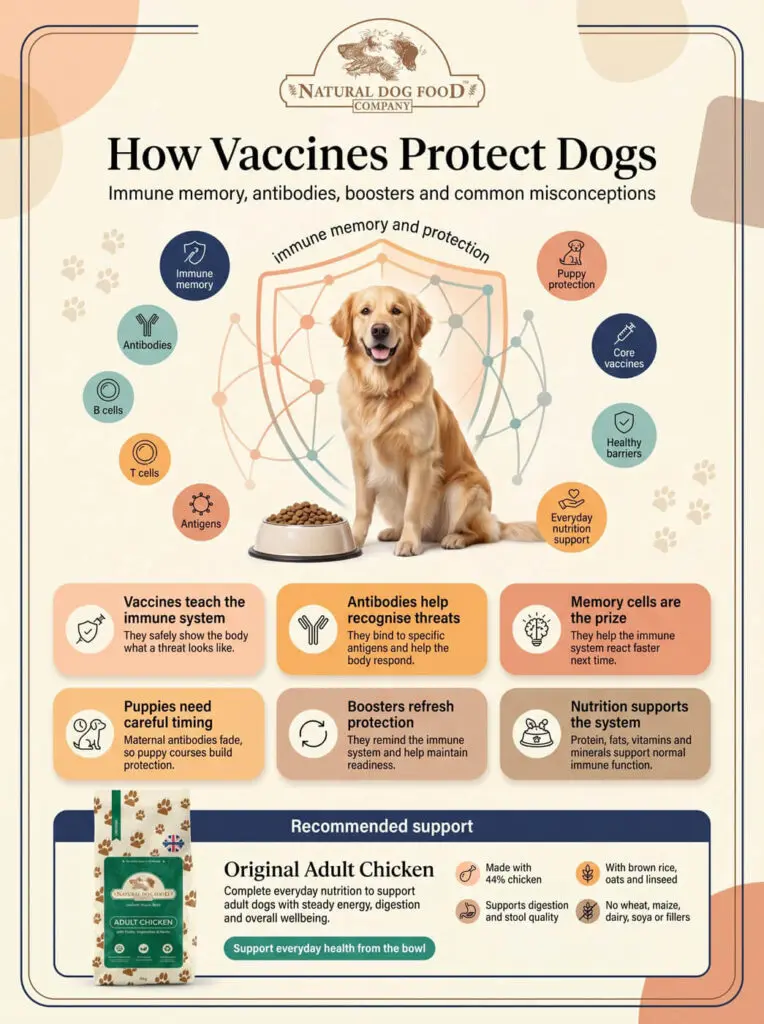
A vaccine contains a safe form, part or signal of a disease-causing organism. It does not need to cause the full disease to be useful. Instead, it presents the immune system with enough information to recognise the threat. This information is called an antigen; antigens are the identifying features the immune system learns to detect.
When a vaccine is given, immune cells notice the antigen and begin processing it. Some cells present that information to lymphocytes, which are white blood cells involved in targeted immunity. B cells can develop into plasma cells, which produce antibodies. T cells help coordinate the immune response and can also help destroy infected cells.
Antibodies are proteins designed to recognise and bind to specific antigens. They can help neutralise pathogens, block them from entering cells, or mark them so other immune cells can remove them. They are one of the most measurable signs that the body has responded to vaccination, but they are not the whole story.
Immune memory is the real prize. After vaccination, some B cells and T cells become memory cells. These cells remain in the body, ready to respond if the dog encounters the real infection in the future. The second response is usually faster and stronger than the first. This is why vaccination often protects dogs better against severe disease than when unvaccinated dogs meet the infection for the first time.
Puppy vaccinations
Puppy vaccination is especially important because puppies are born with immature immune systems. In the early weeks of life, they receive some protection from their mother through antibodies in the first milk, known as colostrum. These maternal antibodies are helpful, but they gradually fade. While they are present, they can also interfere with how well a vaccine works.
Puppies are given a course of vaccinations rather than one single injection. The aim is to protect them as maternal immunity decreases and their own immune system becomes ready to respond. Breeders and rescue centres will usually provide puppies with vaccinations before they leave but it is best to check their vaccination status before taking them home, you can then contact your vet to book any required vaccination.
Does my dog need yearly vaccinations?
Boosters exist because immunity does not last in exactly the same way for every vaccine, every disease or every dog. Some vaccines produce long-lasting protection. Others need more regular boosting to keep protection reliable. A booster reminds the immune system what the antigen looks like, encouraging antibody production and refreshing immune memory.
This is where misunderstanding often begins. Some owners worry that boosters mean the first vaccines “did not work”. That is not the case. Boosters are part of how vaccination schedules maintain protection over time. The same principle applies in many areas of medicine. The immune system is living, active and responsive, .
Another common misconception is that vaccines overload the immune system. In reality, a dog’s immune system deals with countless antigens every day through food, soil, air, water, other animals and the general environment. Vaccines present a controlled, targeted challenge compared with the unpredictable exposure that comes from real infectious disease.
Some owners also ask whether a vaccinated dog can still become ill. The answer is yes, it can happen, depending on the disease, the vaccine, the dog’s immune response and the level of exposure. No vaccine can promise perfect protection in every individual. However, vaccination greatly improves the immune system’s preparedness and can reduce the risk of severe illness, complications and spread.
Core and non-core vaccines
It is also useful to understand the difference between core and non-core vaccines. Core vaccines protect against diseases considered serious, widespread or important enough that all dogs should generally be protected. Non-core vaccines are recommended according to lifestyle and risk. A dog who mixes with many other dogs, travels, attends kennels, walks in certain environments or lives in a particular region may need different protection from a dog with a quieter lifestyle.
Vaccination decisions should be made with a veterinary surgeon. The right schedule depends on age, health, previous vaccine history, local disease risk, travel plans, lifestyle and legal requirements. Vaccination is not guesswork; it is a risk-based health decision.
How diet supports vaccines
Nutrition also has a role in immune health. Food does not replace vaccination and should never be presented as an alternative. Vaccines train the immune system against specific diseases. Nutrition supplies the body with the materials it needs to run the immune system properly every day.
Immune cells need energy to divide, move and communicate. Antibodies, enzymes and many immune signalling molecules depend on amino acids from dietary protein. The skin and gut lining, both important immune barriers, require steady nutrient supply for maintenance and renewal. Fatty acids support cell membranes and inflammatory balance. Vitamins and minerals help support normal immune function and antioxidant protection.
The gut is especially important because it is one of the immune system’s busiest contact points with the outside world. Every meal brings external material into the body. The digestive tract has to absorb useful nutrients while helping to manage bacteria, irritants and unwanted organisms. A steady, complete diet supports this daily work.
For adult dogs, Natural Dog Food Company Original Adult Chicken is a strong everyday choice. Made with 44% chicken, including 26% freshly prepared chicken, it provides a high-quality source of animal protein to support muscle maintenance, tissue repair and general wellbeing. Brown rice, oats, linseed, sugar beet and brewer’s yeast help support digestion, steady energy and stool quality, while the fruit, vegetable and herb blend provides natural micronutrients as part of a complete daily recipe. The food is free from wheat, maize, dairy, soya, fillers and artificial ingredients.
That does not make food a vaccine, and it does not make nutrition a treatment for infectious disease. It means that good daily feeding supports the same body systems vaccines rely on: a responsive immune system, healthy barriers, normal repair processes and overall resilience.
What are the side effect of vaccinations in dogs?
Veterinary advice should always be sought if a dog is unwell after vaccination, has a history of vaccine reactions, is immunocompromised, has ongoing illness or is overdue for important protection.
Mild tiredness or tenderness can occur after vaccination, but owners should seek help for severe swelling, collapse, breathing difficulty, repeated vomiting, facial swelling or marked weakness as urgent.
Vaccines protect dogs by teaching the immune system before danger arrives. They help the body recognise serious diseases, produce targeted antibodies and build immune memory. Good nutrition then supports the everyday health of the body carrying that immune memory. Together, sensible vaccination and steady daily nourishment give dogs a stronger foundation for a healthy, active life.
For more helpful articles, visit our blog page!
For more blog posts, visit our blog page!
Keep in touch: