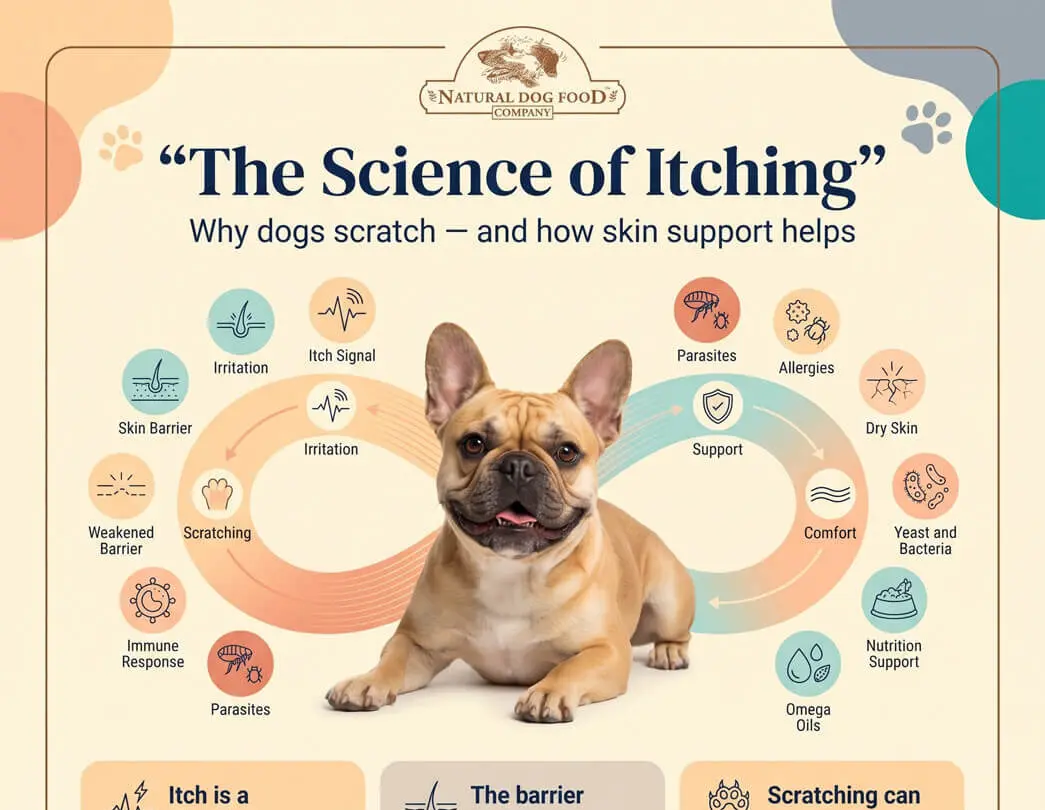

Scratching is one of the most common signs owners notice when something is not quite right. A dog may scratch behind the ears, nibble at the paws, lick the legs, rub their face into the carpet or chew at the base of the tail. Sometimes the skin looks red or sore or the coat becomes thinner in patches, sometimes there is no obvious change at first, but the dog simply cannot seem to settle.
The science of itching in dogs
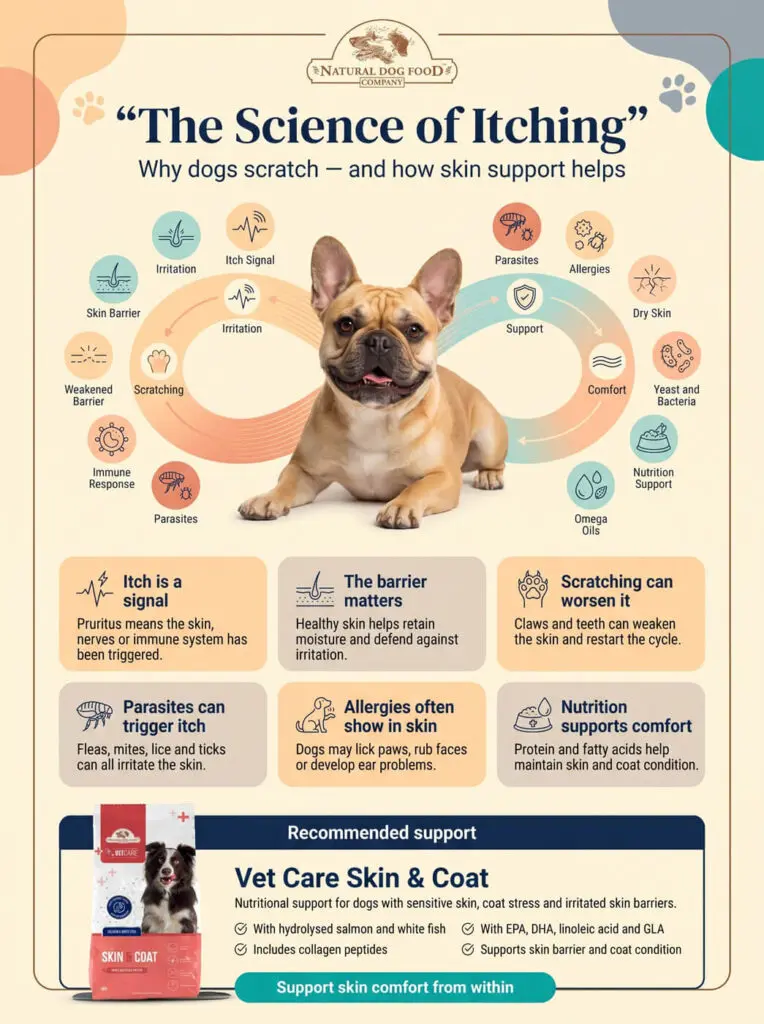
The medical word for itching is pruritus. It is not a diagnosis on its own but rather a sign that something has activated the skin, the nerves or the immune system in a way that creates the urge to scratch. The most common causes include parasites, infections and allergies, although there are many possible triggers.
To understand itching, it helps to understand the skin. The skin is not just a covering. It is a living barrier made up of cells, oils, proteins, immune defences, nerves and microorganisms. It helps retain moisture, protect against irritants, defend against infection and send sensory information to the nervous system.
When the skin is healthy, this barrier works quietly. When it is dry, inflamed, damaged or invaded by parasites, the body sends warning signals. Special nerve endings in the skin detect irritation and send messages through the nervous system to the brain. The brain interprets those signals as itch, and the dog responds by scratching, licking, chewing or rubbing.
This response makes sense in the short term. If an insect is crawling on the skin, scratching may remove it. If there is debris in the coat, rubbing may shift it. But when the itch is caused by allergy, inflammation or infection, scratching often makes the problem worse. The claws and teeth damage the skin surface, the barrier becomes weaker, and bacteria or yeast can take advantage. The result is the familiar itch-scratch cycle.
Common causes of itching in dogs
Inflammation is central to that cycle. When the immune system detects a problem, it releases chemical messengers such as cytokines. These signals help call immune cells to the area and increase local activity. In allergic dogs, the immune system reacts too strongly to something that should not normally cause such a dramatic response. This may be pollen, dust mites, mould, flea saliva, certain foods or other environmental triggers.
Histamine
Histamine is often mentioned in relation to itching, but it is only part of the picture. Dogs with allergic skin disease can have several inflammatory pathways involved, not just histamine alone. This is why a dog’s itch may not always respond neatly to simple antihistamine-style thinking. The biology is more complex, involving immune cells, skin-barrier function, nerve signalling and inflammatory mediators.
Parasites
Parasites are one of the first things to consider. Fleas, mites, lice and ticks can all irritate the skin. Fleas are especially important because some dogs develop flea allergic dermatitis. In these dogs, even a small number of bites can trigger a strong allergic response to flea saliva. The dog may scratch intensely, especially around the back end, tail base and thighs.
Mites
Mites can also cause severe itching. Some mites live on or in the skin and can trigger inflammation, hair loss, scabbing and discomfort. Because parasites are common and treatable, they should always be ruled out when a dog is itchy, especially if the scratching is sudden, intense or affecting other animals in the home.
Allergies
Allergies are another major cause. In dogs, allergies often show through the skin rather than the nose and eyes. Atopic dermatitis is an allergic skin condition commonly linked to environmental allergens. It often affects the feet, face, ears, front legs and abdomen, although some dogs itch more generally. Scratching, paw licking, face rubbing, recurrent ear problems, hair loss and skin infections can all follow.
Food
Food can also be involved, although true food allergy is less common than many owners assume. A food allergy is an immune reaction, usually to a protein. A food intolerance is different and does not involve the immune system in the same way. Both can cause discomfort, but food allergy is more likely to produce ongoing skin signs, ear problems or digestive signs that return until the trigger is identified and controlled.
Dry skin
Dry skin is another reason dogs scratch. When the skin barrier loses moisture, the surface can become flaky, tight and more reactive. This may happen because of weather, bathing too often, harsh shampoos, poor coat condition, nutritional imbalance or underlying skin disease. The key issue is barrier weakness. A dry, poorly protected skin surface allows irritation to build more easily.
Yeast and bacteria
Yest and bacteria can make itching worse. They may not be the original cause, but once the skin is scratched and inflamed, they can multiply more easily. Yeast often produces a greasy feel, strong smell and darkened skin. Bacterial infection may cause spots, scabs, redness, broken skin or discomfort. Many dogs begin with allergy or parasites, then develop secondary infection because the skin has been damaged.
Stress
Stress can also influence itching. It may not be the root cause, but it can lower the threshold for scratching. Dogs may lick or chew more when anxious, bored, frustrated or unsettled. Repeated licking can then damage the skin, creating a real physical problem even if the behaviour began as a stress response. The skin and nervous system are closely connected, so itch is not always purely external.
Hidden causes should also be considered.
Hormonal problems, pain, immune-mediated disease, contact irritants, anal gland discomfort and ear disease can all change how a dog scratches, licks or rubs. This is why persistent itching should not be dismissed as habit. The body is usually trying to say something.
How nutrition can affect a dog’s skin
Nutrition matters because the skin is constantly renewing. Skin cells, hair follicles, immune cells and barrier lipids all need a steady supply of usable nutrients. Protein provides amino acids for tissue repair and hair growth. Essential fatty acids support cell membranes, moisture retention and inflammatory balance. Omega-3 fatty acids, including EPA and DHA, are associated with natural anti-inflammatory support and may help support dogs with allergic skin disease.
This is where a skin-focused diet can play a useful supporting role. Food is not a flea treatment, an allergy cure or a replacement for veterinary care. But the right nutrition can support the skin barrier from within, helping the body maintain healthier skin and a stronger coat while other causes are identified and managed.
How natural dog food can help itchy dogs
Natural Dog Food Company Vet Care Skin & Coat has been developed to help support a dog prone to itchy skin. It uses hydrolysed salmon and hydrolysed white fish protein for dogs with dietary sensitivities, collagen peptides to support skin structure, and carefully selected oils including salmon oil, algae, borage oil and soya oil. These provide omega-3 and omega-6 fatty acids, including EPA, DHA, linoleic acid and GLA, to support skin barrier function, moisture retention and coat condition.
When should I contact a vet?
Veterinary advice should always be sought if itching is severe, persistent or associated with broken skin, hair loss, smell, discharge, swelling, ear problems, repeated licking, scabs, bleeding or obvious discomfort. Itching is a sign, not the final answer.
A dog who scratches constantly is not simply being fussy or dramatic. Their skin, immune system or nervous system is being triggered. By understanding parasites, allergies, dry skin, infection, stress and nutrition, owners can move beyond guesswork and start supporting the skin properly. When the cause is managed and the skin barrier is nourished, dogs have a much better chance of feeling comfortable in their own coat again.
For more blog posts, visit our blog page!
Keep in touch: