
Ear infections are one of those problems owners often notice before they understand. A dog may shake their head, scratch at one ear, rub their face along the carpet or seem uncomfortable when the ear is touched. There may be redness, wax, an unpleasant smell, discharge, swelling or a sudden reluctance to have the head handled.
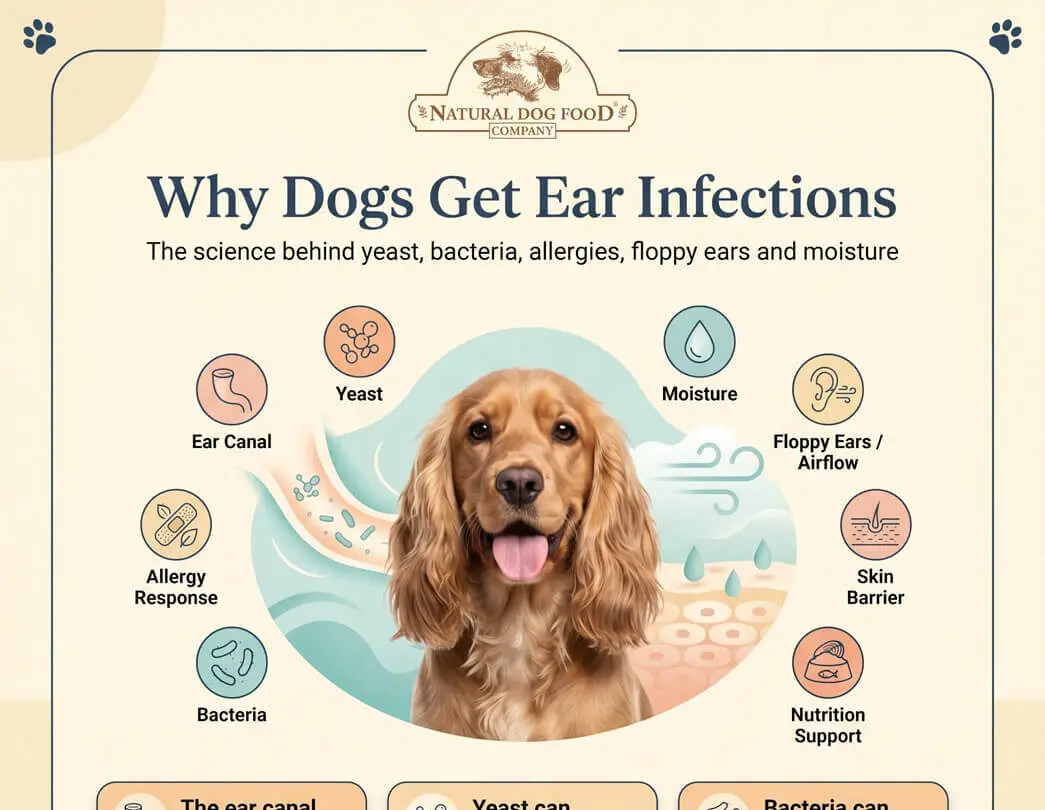
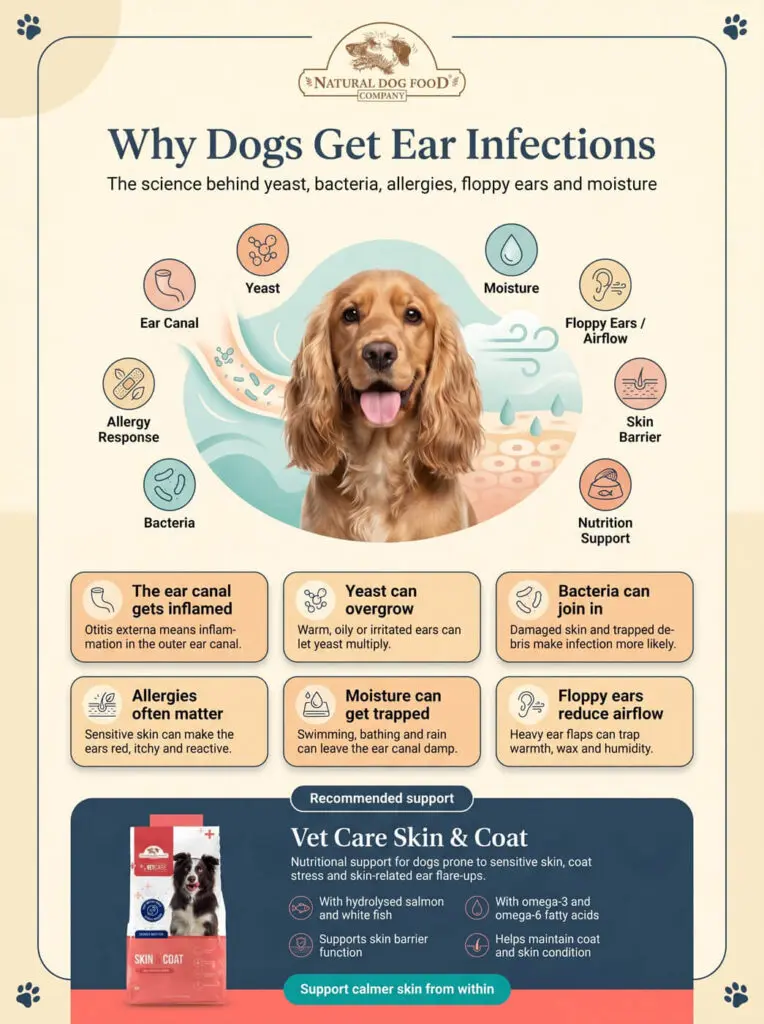
Although we often call this an “ear infection”, the more accurate term is usually otitis externa, which means inflammation of the external ear canal. This is the part of the ear that runs from the visible opening down towards the eardrum. In dogs, this canal is longer and more curved than ours, which means moisture, wax and debris can become trapped more easily. Otitis externa is common in dogs and can involve itching, pain, redness, odour, discharge and swelling.
What causes ear infections?
The important point is that ear infections rarely happen for no reason. Yeast and bacteria are often involved, but they are usually taking advantage of an ear environment that has already changed. The real question is often not simply “what is growing in the ear?” but “why has the ear become a good place for it to grow?”
A healthy ear canal has its own protective system. The skin lining the canal produces oils and wax, known as cerumen, which help trap debris and protect the surface. The ear canal also has a natural microbiome, made up of small populations of microorganisms that can live there without causing a problem. When the ear is balanced, these organisms are kept under control.
Problems begin when that balance changes. Inflammation, excess moisture, allergies, trapped debris, foreign bodies, parasites or changes in wax production can all alter the ear canal environment. Once the canal becomes warm, moist, inflamed or narrowed, yeast and bacteria can multiply more easily. This is why an ear infection is often the result of several factors working together rather than one single cause.
Yeast
Yeast is one of the most common organisms involved in canine ear disease. The yeast most often discussed is Malassezia, which can live naturally on the skin and in the ears. In small numbers, it may not cause any issue. But when the ear canal becomes inflamed, oily, humid or irritated, Malassezia can overgrow. This may lead to itching, redness, a strong smell and a brown, waxy discharge. Yeast is often secondary to an underlying skin or allergy problem rather than the original cause.
Bacteria
Bacteria can also be involved. Some bacterial ear infections are mild, while others can become more painful and difficult to manage. Bacteria thrive when the ear canal is inflamed, damaged or filled with debris. Once the skin barrier is disrupted, bacteria have more opportunity to multiply. This can lead to swelling, discharge, soreness and sometimes deeper infection if the problem is not treated properly.
Allergies
Allergies are one of the most important reasons dogs get repeated ear infections. This may surprise owners because they expect allergies to show up as sneezing or watery eyes. In dogs, allergies often show themselves through the skin. The ears are lined with skin too, so they can become part of the same inflammatory response. Environmental allergies and food sensitivities can both contribute to ear inflammation in some dogs. Allergies are recognised as a common underlying cause of otitis externa, and unless underlying causes are addressed, ear problems often return.
This is where the immune system becomes important. In an allergic dog, the immune system reacts too strongly to something that should not normally cause such a response. Inflammatory signals are released in the skin, including the skin of the ear canal. The canal may become red, itchy, swollen and warmer than usual. Wax production may increase. The normal movement of wax and debris out of the ear may slow down. The result is an ideal environment for yeast and bacteria.
Moisture
Moisture is another major factor. Water itself is not usually the enemy, but trapped moisture can be. When the ear canal stays warm and damp after swimming, bathing or heavy rain, it becomes much easier for yeast and bacteria to multiply. This is especially true if the dog already has allergic skin, excess wax or narrow ear canals. Warmth plus moisture plus inflammation is the classic recipe for microbial overgrowth.
Other factors to consider
Floppy ears add another layer to the problem. Dogs with heavy or pendulous ears often have less airflow around the ear opening. The ear flap, or pinna, can act almost like a lid, helping trap warmth and moisture inside. This does not mean every dog with floppy ears will get infections, but it does increase the chance of the ear canal becoming humid and poorly ventilated. Spaniels, retrievers, basset hounds and similar breeds can therefore be more prone to recurring ear issues.
Hairy ear canals can have a similar effect. If hair, wax and debris build up, the canal becomes harder to keep dry and clean. In some dogs, the canal itself can also become thickened or narrowed after repeated inflammation. This creates a cycle: inflammation narrows the canal, the narrower canal traps more debris and moisture, and the trapped debris encourages more inflammation.
Cleaning your dog’s ears
Cleaning can help in the right circumstances, but it must be done sensibly. When there is abnormal wax or debris, it can make it harder for veterinary ear medication to reach the skin properly. Yeast and bacteria can sit within layers of material in the canal, which is why proper cleaning is often part of managing ear disease. However, over-cleaning or using harsh products can irritate the ear and make matters worse. Ear cleaning should support the skin, not strip or inflame it.
Can diet help with ear infections?
Diet becomes relevant because many recurring ear problems are connected to skin health, immune response and inflammation. If a dog has food sensitivity, the ears may be one of the places where that sensitivity shows. Even when food is not the main cause, nutrition still supports the skin barrier, immune balance and tissue repair. The ear canal is lined with skin, and that skin needs the same nutritional support as the rest of the body.
Protein is important because skin cells are constantly renewing. The ear canal lining must repair and maintain itself, especially after inflammation. Essential fatty acids are also crucial. Omega-6 fatty acids help support the skin’s moisture barrier, while omega-3 fatty acids such as EPA and DHA are associated with natural anti-inflammatory support. A well-supported skin barrier is less likely to become dry, reactive and easily irritated.
How to treat ear infections
Veterinary advice should always be sought if an ear is painful, swollen, smelly, bleeding, producing discharge, or if the dog is shaking their head repeatedly. Owners should also seek help if infections keep returning. Recurrent ear infections often mean there is an underlying cause that has not yet been fully controlled.
A healthy ear is not just a clean ear. It is a balanced environment, with normal skin, controlled moisture, healthy wax production, good airflow and a stable microbiome. When that balance is disturbed, yeast and bacteria can quickly take advantage. When the skin is supported, allergies are managed, moisture is controlled and the right nutrition is in place, the ears have a much better chance of staying calm, comfortable and healthy.
For more blog posts, visit our blog page!
Keep in touch: