
Keeping your dog’s teeth clean is more than just a good habit and avoiding dog breath, here we look at your dog’s overall health including oral bacteria, plaque, gum disease and digestive causes.
Dog breath is often treated as a joke, but it can tell owners a great deal about what is happening inside the mouth. A mild smell after eating is normal. Persistent bad breath, however, is usually not something to ignore. It can be an early sign that bacteria, plaque, tartar or gum inflammation are beginning to affect oral health.
A dog’s mouth is a busy environment. It is warm, moist and constantly exposed to food particles, saliva, toys, treats, chews and whatever else a dog decides to investigate. This makes it the perfect place for bacteria to live. Not all oral bacteria are harmful. A healthy mouth contains a balanced community of microorganisms, known as the oral microbiome. Problems begin when that balance shifts and certain bacteria are allowed to dominate.
Why does my dog have bad breath?
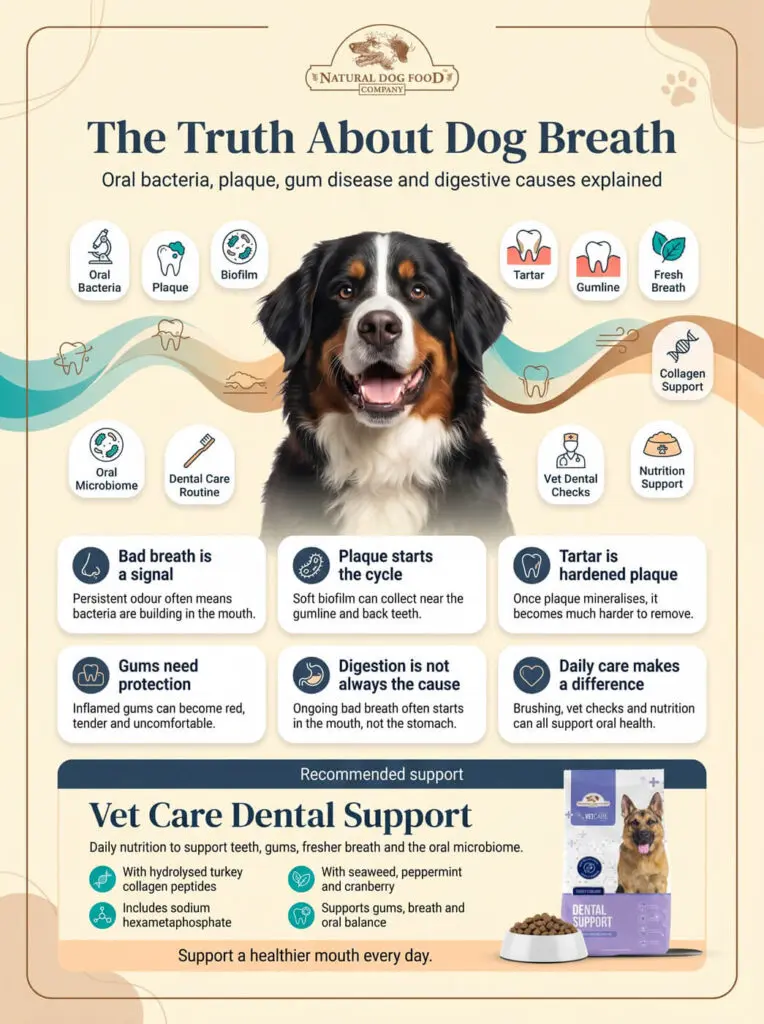
The main driver behind bad breath is often bacterial activity. Some bacteria break down proteins and other organic material in the mouth, releasing unpleasant-smelling compounds. These are often described as volatile sulphur compounds, and they are a major reason breath can become strong, sour or rotten-smelling. In simple terms, bad breath usually means bacteria are active somewhere they should not be allowed to build up.
Plaque is where the process often begins. Plaque is a soft, sticky biofilm that forms on the teeth. It contains bacteria, saliva proteins and food residues. At first, plaque may be difficult to see. It can sit quietly near the gumline, especially around the back teeth. If it is not disrupted by chewing, brushing or dental care, it can become thicker and more organised.
What are the signs of dental issues?
Tartar
Over time, minerals in saliva can harden plaque into tartar, also known as calculus. Tartar is the yellow or brown material often seen near the gumline. Once tartar has formed, it is much harder to remove with normal chewing or at-home care. It also creates a rough surface where more plaque can attach, allowing the cycle to continue.
The gumline is especially important. Healthy gums should act as a protective seal around the teeth. They help defend the tissues beneath and limit bacterial invasion. When plaque sits against the gumline, the immune system responds. Blood flow increases, inflammatory signals are released, and the gums can become red, swollen or sensitive. This early stage is often called gingivitis.
Gingivitis
Gingivitis is inflammation of the gums. It may cause redness, bleeding, tenderness and bad breath. At this stage, the problem may still be reversible with proper care. If inflammation continues, however, it can progress into periodontal disease, where the deeper structures supporting the teeth become affected. This can involve gum recession, pocket formation, infection, loose teeth and pain.
One of the challenges with dental disease is that dogs often hide discomfort well. A dog may still eat, still play and still wag their tail even when their mouth is sore. Some simply change how they chew. They may favour one side, drop food, avoid harder chews, become slower with meals or develop a preference for softer textures. Owners may notice the breath first, long before obvious pain is seen.
Bad breath
Bad breath can also come from material trapped in the mouth. Hair, food, plant matter, small pieces of chew or damaged tissue can all create areas where bacteria multiply. Broken teeth, retained puppy teeth, mouth ulcers, oral masses or infected gums can also produce a strong smell. Persistent breath changes should not be dismissed as normal.
Can diet affect dog breath?
Digestive causes are sometimes blamed for dog breath, and occasionally the digestive system can contribute. Reflux, vomiting, regurgitation, dietary indiscretion or certain gastrointestinal problems may alter breath smell. A dog who has eaten something unpleasant may also carry that smell temporarily. However, in many dogs with ongoing bad breath, the primary issue is in the mouth rather than the stomach.
This distinction matters because changing food alone will not remove established tartar or treat advanced gum disease. If the problem is plaque, tartar or infection, the mouth itself needs attention. That may include veterinary examination, professional cleaning, dental X-rays, extractions where needed and a proper at-home care plan.
That said, nutrition can still play a valuable supporting role. The mouth is not separate from the rest of the body. Gum tissue needs a steady supply of nutrients for repair and maintenance. The oral microbiome is influenced by the environment in the mouth. The body’s inflammatory response depends on adequate protein, fatty acids, vitamins and minerals. A dog’s daily diet can support oral health, even though it cannot replace brushing or veterinary dental treatment.
What ingredients can support dog dental health?
Collagen is particularly relevant to gum health. The gums are living connective tissue, and collagen is one of their key structural proteins. Collagen helps give strength and resilience to the tissues that surround and support the teeth. When gums are inflamed or under pressure from plaque, the body needs amino acid building blocks to maintain and repair those tissues.
Oral defence also involves antimicrobial peptides, these are small proteins naturally produced in tissues such as the gums. They help the mouth manage harmful microbes and maintain a protective barrier. This is one reason oral health is not just about clean teeth; it is about supporting the biology of the whole mouth.
Certain ingredients can also help create a less favourable environment for plaque and odour. Sodium hexametaphosphate can help bind minerals involved in tartar formation. Seaweed, peppermint, cranberry and green tea extract are all used in oral health nutrition because of their roles in supporting fresher breath, microbial balance, gum comfort and plaque management. The aim is not to perfume the breath, but to support the mouth environment that produces fresher breath naturally.
What is the best dental food for dogs?
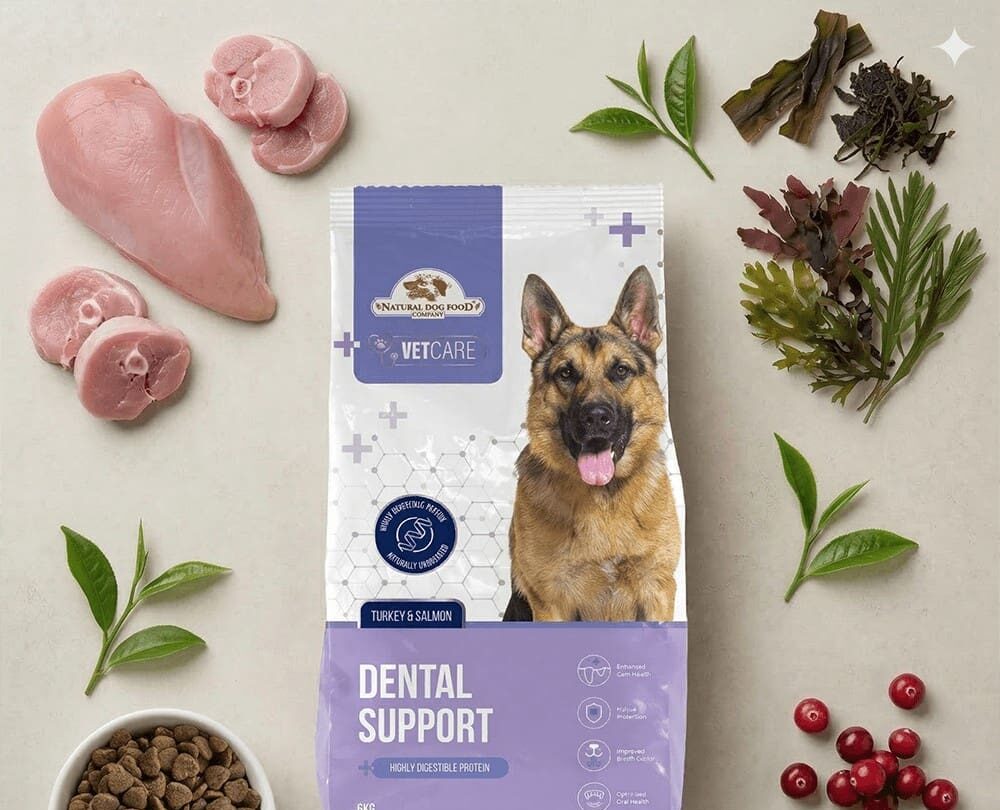
Natural Dog Food Company Vet Care Dental Support has been developed to support teeth, gums, breath and the oral microbiome through daily feeding. The recipe uses hydrolysed turkey collagen peptides to support gum tissue, alongside a targeted blend of sodium hexametaphosphate, seaweed, peppermint, cranberry and green tea extract. It also includes prebiotics MOS and FOS to support microbial balance, helping address breath odour at the level of the mouth environment rather than simply masking it.
It is important to be clear: food is not a replacement for tooth brushing, dental checks or professional veterinary treatment. A dog with established tartar, bleeding gums, loose teeth, pain, swelling, drooling, reluctance to chew or persistent strong breath should be assessed by a vet. Dental disease can progress quietly, and by the time a dog shows obvious discomfort, the problem may already be advanced.
How can I care for my dog’s teeth?
For owners, the best approach is consistent care. Check the mouth regularly. Look at the gumline, not just the front teeth. Notice changes in breath, chewing, appetite and comfort. Introduce tooth brushing gradually where possible. Use appropriate dental chews or toys safely. Keep up with veterinary checks. And choose daily nutrition that supports the mouth, gums and oral microbiome as part of a wider dental routine.
Bad breath is not just a smell, it is often a signal. It can tell us that bacteria are building, gums are inflamed, plaque is organising or the mouth needs more support. When owners understand the science behind breath, plaque and gum disease, they can act earlier and help protect one of the most important parts of a dog’s daily life: a comfortable, healthy mouth.
How often should I brush my dog’s teeth?
It is recommended to brush your dog’s teeth at least once a week but anything is better than nothing. You can use a normal manual toothbrush with water or there are some dog specific toothpastes available to buy. Do not use human toothpaste to brush your dog’s teeth. Human toothpastes often have ingredients which are toxic to dogs.
Introduce from an early age if possible so this become parts of their routine. For adult and older dogs it’s never too late, introduce slowly for a short amount of time each sessions. Build up the time as they become more settle with brushing.
For more helpful articles, visit our blog page!
For more blog posts, visit our blog page!
Keep in touch: