
Colitis is one of those conditions that owners often notice very quickly, because it changes a dog’s normal toilet habits. A dog may suddenly need to go outside more often, pass only small amounts, strain after finishing, or produce stools that are loose, mucousy or streaked with fresh red blood.
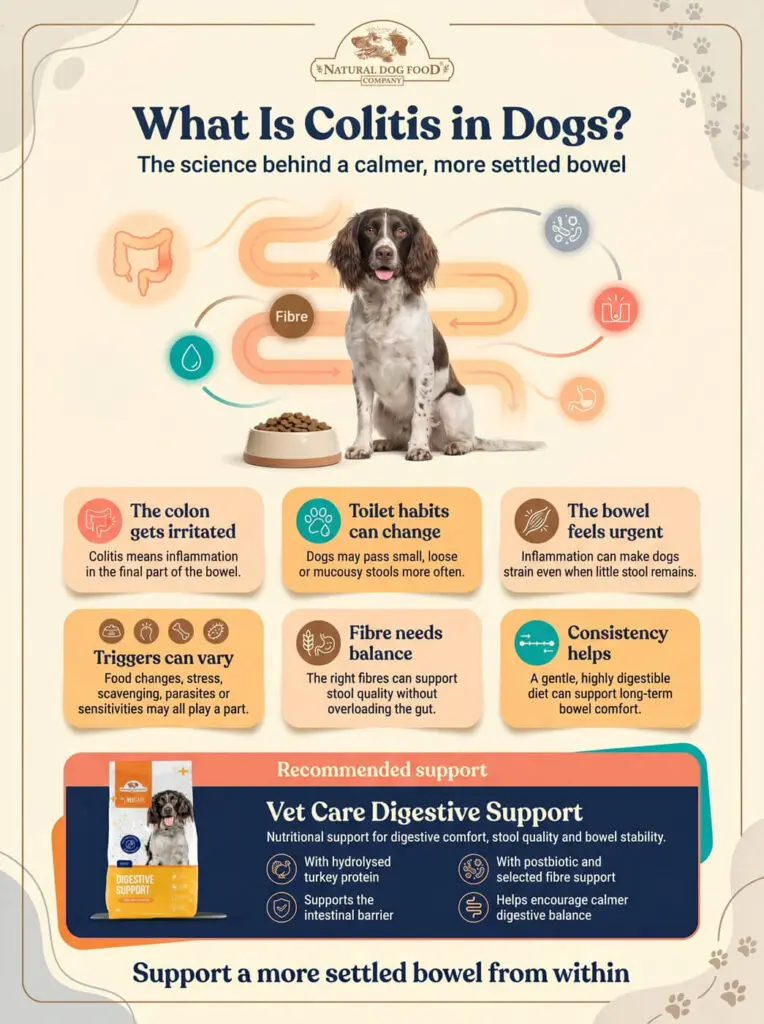
Although this can look alarming, colitis is not unusual. The word itself simply means inflammation of the colon, which is the final part of the large intestine. The colon is responsible for absorbing water, forming stools, supporting the gut microbiome and helping waste leave the body in a controlled way.
When the colon becomes inflamed, those jobs are disrupted. Water is not absorbed as efficiently. The bowel wall becomes more sensitive. Mucus production may increase. Normal movement through the bowel can become irregular or urgent. This is why colitis often causes frequent, small, loose stools rather than one large episode of diarrhoea.
What is colitis?
A useful way to understand colitis is to think of the colon as a finishing and control chamber. Most digestion has already happened before food reaches it. The small intestine has done much of the work of breaking food down and absorbing nutrients. The colon’s job is to manage what remains: water, fibre, bacteria, electrolytes and waste.
The lining of the colon is made up of epithelial cells, mucus-producing goblet cells, immune cells and a dense population of microorganisms. Together, these form a living barrier. This barrier helps keep useful substances moving in the right direction while limiting irritation from bacteria, toxins, poorly digested food particles or inflammatory triggers.
What are the symptoms of colitis?
When inflammation develops, the barrier becomes less settled. Immune cells release chemical messengers called cytokines, which help coordinate the inflammatory response. Blood flow to the area may increase. The bowel lining can become more permeable and reactive. The dog may feel urgency even when there is little stool to pass. This straining is known as tenesmus, and it is one of the classic signs of large-bowel irritation.
The mucus often seen in colitis is also part of the science. Mucus is normally produced to lubricate and protect the bowel lining. During inflammation, the colon may produce more mucus as a defensive response. Fresh red blood can appear because the lower bowel is irritated and the blood has not travelled far enough through the digestive tract to become dark or digested.
What causes colitis in dogs?
Colitis can be acute or chronic. Acute colitis comes on suddenly and may settle once the trigger is removed. Chronic colitis lasts longer, returns repeatedly or flares whenever the digestive system is challenged. Some dogs have one-off episodes after eating something unsuitable. Others have a more sensitive gut that needs careful long-term management.
Common triggers include sudden food changes, rich treats, scavenging, stress, parasites, infections and dietary sensitivities. Stress can be a genuine physical trigger, not just a behavioural one. The gut and nervous system communicate constantly through what is often called the gut-brain axis. Stress hormones can alter gut motility, immune activity and microbiome balance, which is why some dogs develop loose stools after travel, kennels, fireworks or a major change in routine.
How does diet affect colitis?
Diet is one of the most important tools in managing colitis because food directly affects the environment inside the gut. A diet that is difficult to digest can leave more undigested material reaching the colon. That material can then be fermented by bacteria, producing gas, odour and compounds that may irritate the bowel further. A highly digestible diet reduces that burden and gives the colon less unnecessary work to do.
Protein choice is especially important. Protein is essential for tissue repair, immune function and daily maintenance, but in some sensitive dogs, certain protein structures can be recognised by the immune system as a problem. This is where hydrolysed protein can be useful. Hydrolysis breaks protein down into smaller peptide chains. These smaller fragments are generally easier to digest and are less likely to contain the larger structures, or epitopes, that can trigger immune recognition in sensitive dogs.
Fibre also needs to be understood properly; it’s not simply a case of “more is better”. Different fibres behave in different ways with some helping to hold water and improve stool consistency. Some add bulk and support normal bowel movement. Others are fermented by gut bacteria, producing short-chain fatty acids such as acetate, propionate and butyrate. Butyrate is particularly interesting because it is an energy source for colon cells and helps support the health of the bowel lining.
However, too much of the wrong fermentable fibre can increase gas and discomfort in some dogs. This is why fibre selection matters. In colitis, the goal is not to overload the gut, but to support stool quality, bowel rhythm and microbial balance.
The microbiome is another key part of colitis. The colon naturally contains a large population of bacteria and other microorganisms. In a healthy gut, these organisms help digest certain fibres, produce beneficial metabolites and interact with the immune system. When the balance is disturbed, known as dysbiosis, inflammation and digestive upset can become harder to settle. Dysbiosis can be both a cause and a result of intestinal inflammation, which is why repeated flare-ups can become a cycle.
What should I feed a dog with colitis?
Managing colitis is therefore about breaking that cycle. The dog needs a diet that is consistent, highly digestible, gentle on the immune system, supportive of the microbiome and helpful for stool formation. Sudden food changes, table scraps, rich extras and random treats can all make management more difficult, because they keep changing the conditions inside the bowel.
This is where nutrition can make a meaningful difference. Food cannot replace veterinary care where veterinary care is needed, but the right diet can play a crucial role in reducing flare-ups and supporting a calmer digestive system. For dogs prone to colitis, the aim is to feed in a way that lowers digestive stress every day, not only when the bowel is already inflamed.
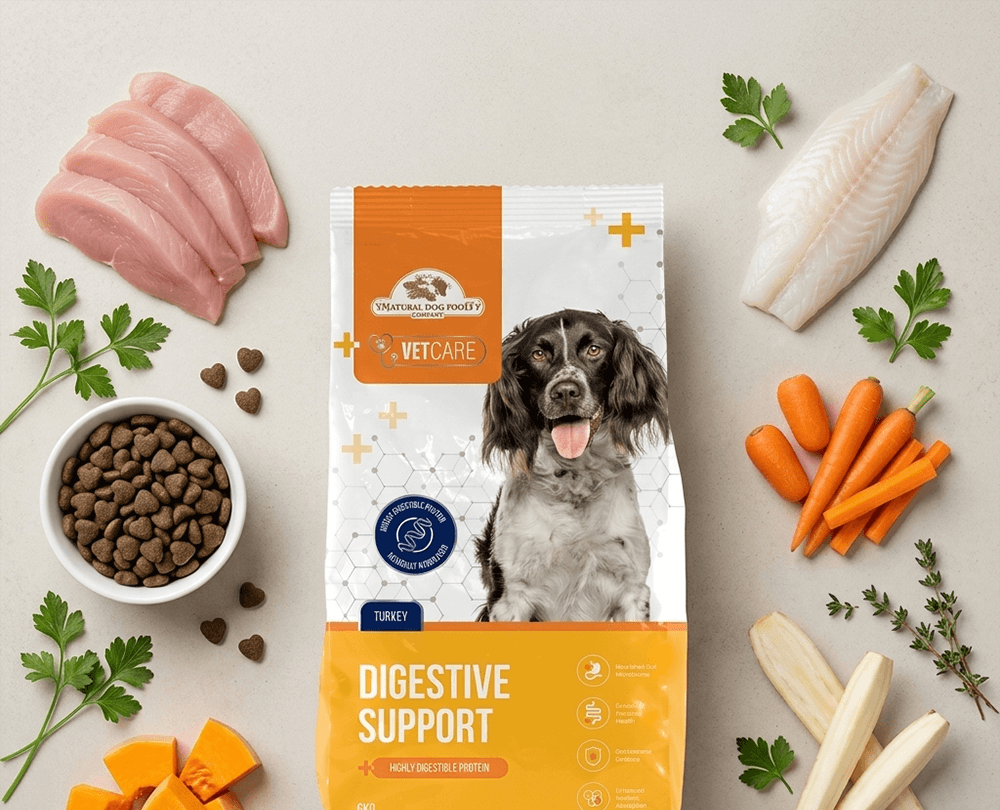
Natural Dog Food Company Vet Care Digestive Support has been developed around these principles. It uses hydrolysed turkey protein for digestibility and low antigenic potential, collagen peptides to support the intestinal barrier, postbiotic support for the microbiome and immune function, and selected fibre to help optimise stool quality. It is a suitable choice for dogs who need a more considered approach to digestive comfort and long-term bowel stability.
When should I contact my vet?
Owners should seek veterinary advice if diarrhoea is persistent, if blood appears repeatedly, or if there is vomiting, weight loss, lethargy, dehydration, abdominal pain, loss of appetite or repeated flare-ups. Colitis is often manageable, but ongoing or severe signs should always be properly investigated.
A healthy colon does far more than produce a normal stool. It helps regulate water balance, supports the microbiome, communicates with the immune system and contributes to daily comfort. When it becomes inflamed, the whole dog can feel unsettled. When it is supported with the right diet and sensible management, many dogs become calmer, more comfortable and more consistent.
For help and advice on diarrhoea in dogs and puppies, visit our blog post.
For more helpful articles, visit our blog page!
For more blog posts, visit our blog page!
Keep in touch: